Detroit Student Leadership Team
(CS4Detroit, 2026)
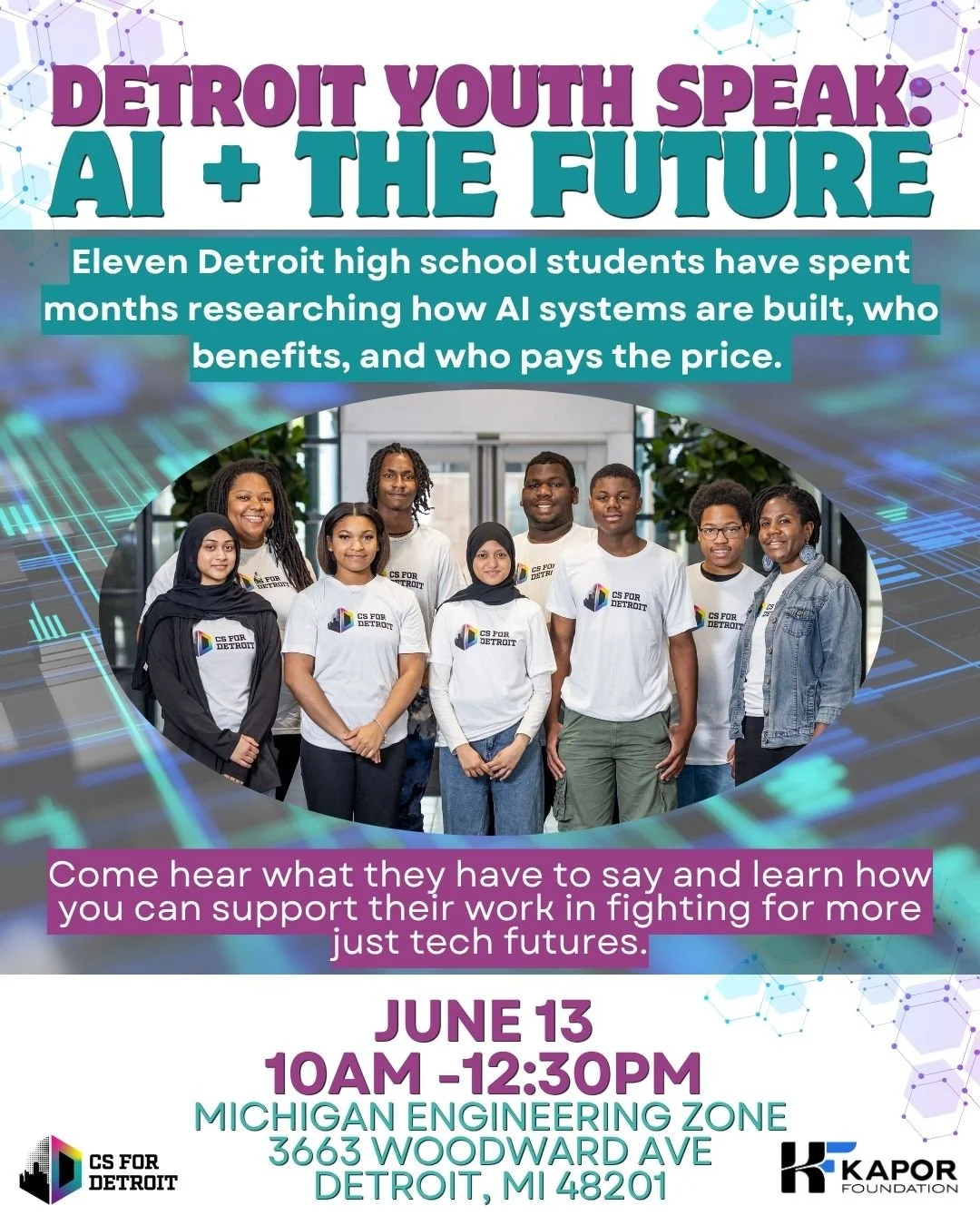
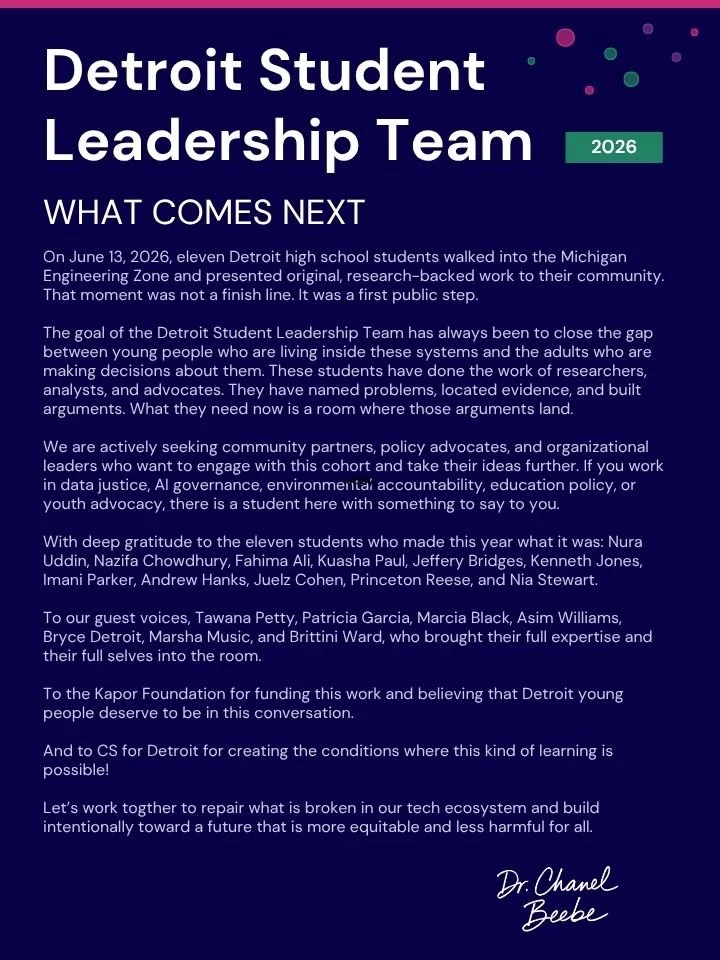
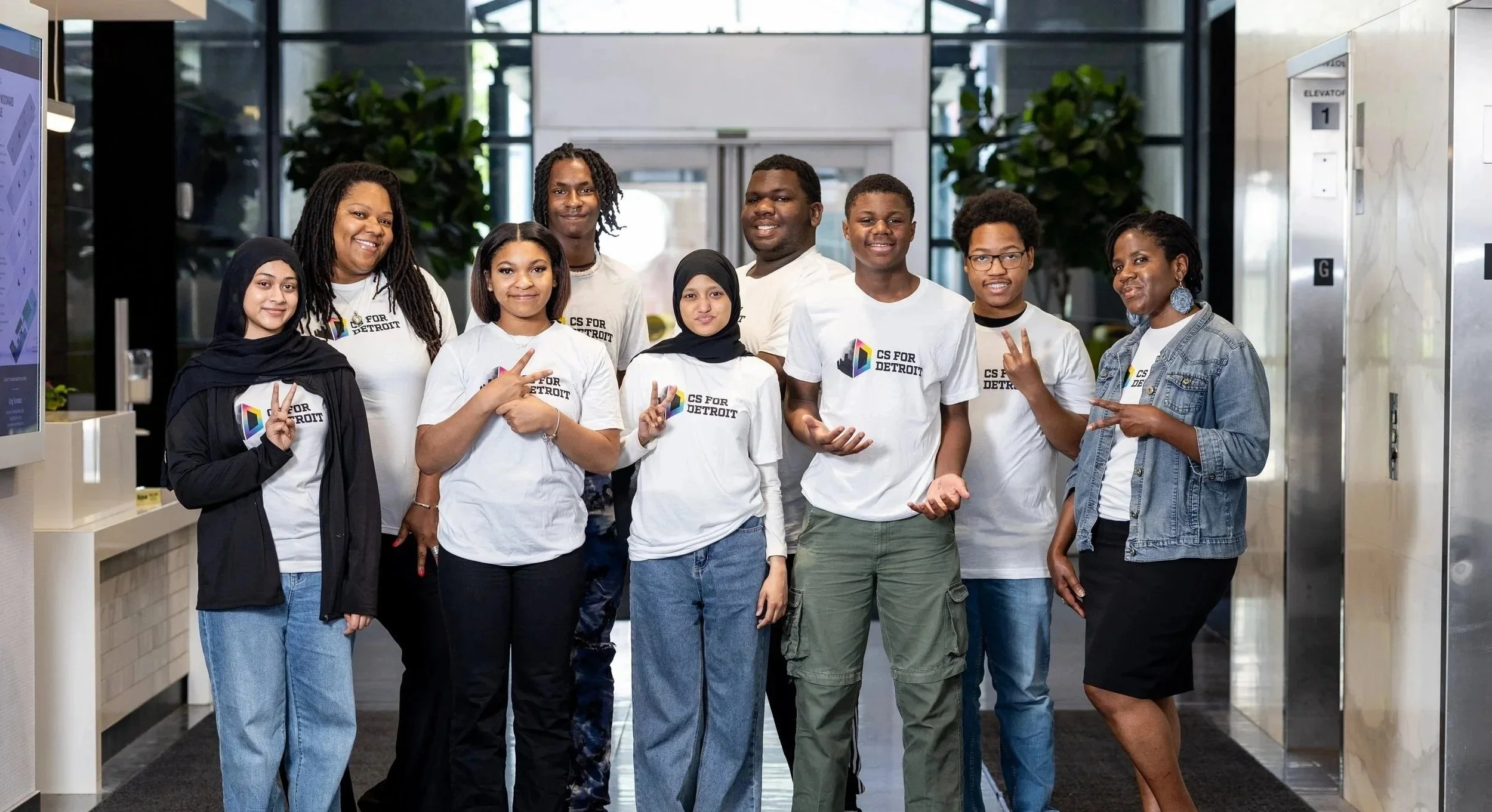
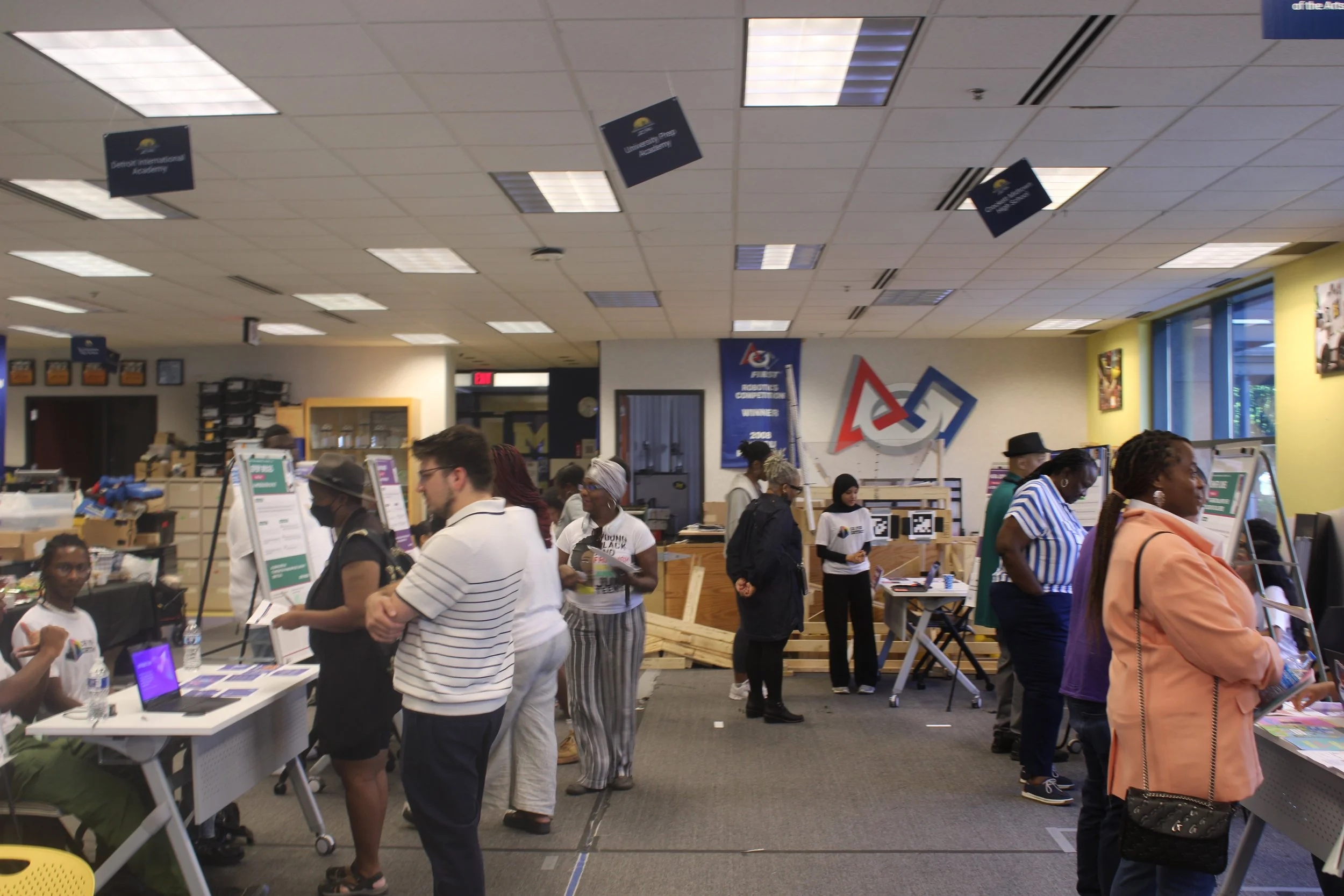
On June 13, 2026, eleven Detroit high school students walked into the Michigan Engineering Zone and presented original, research-backed work to their community. That moment was not a finish line. It was a first public step.
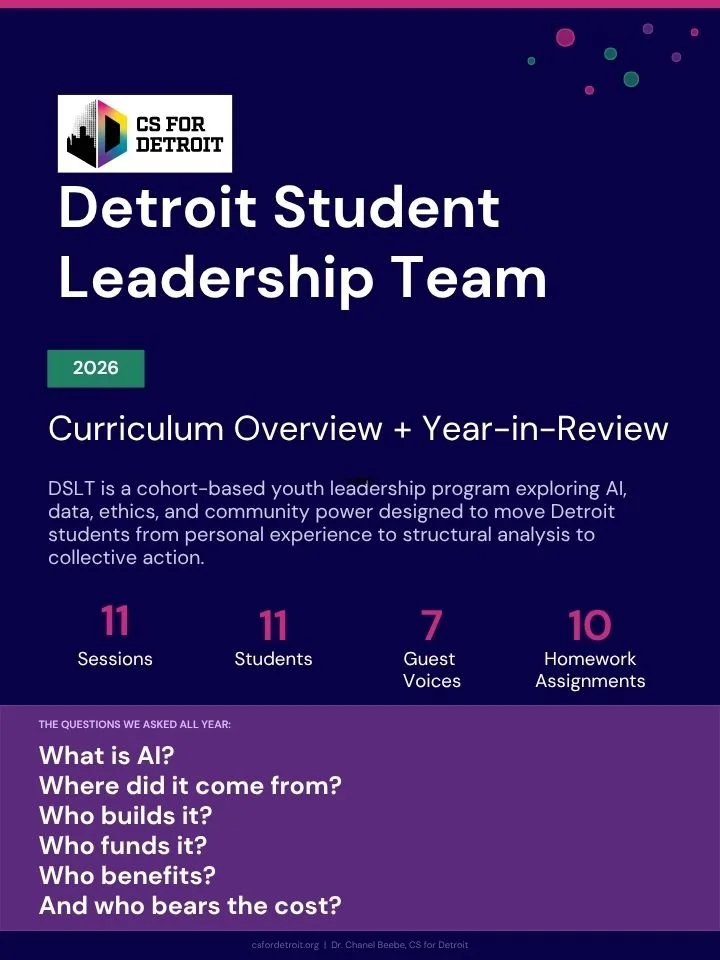
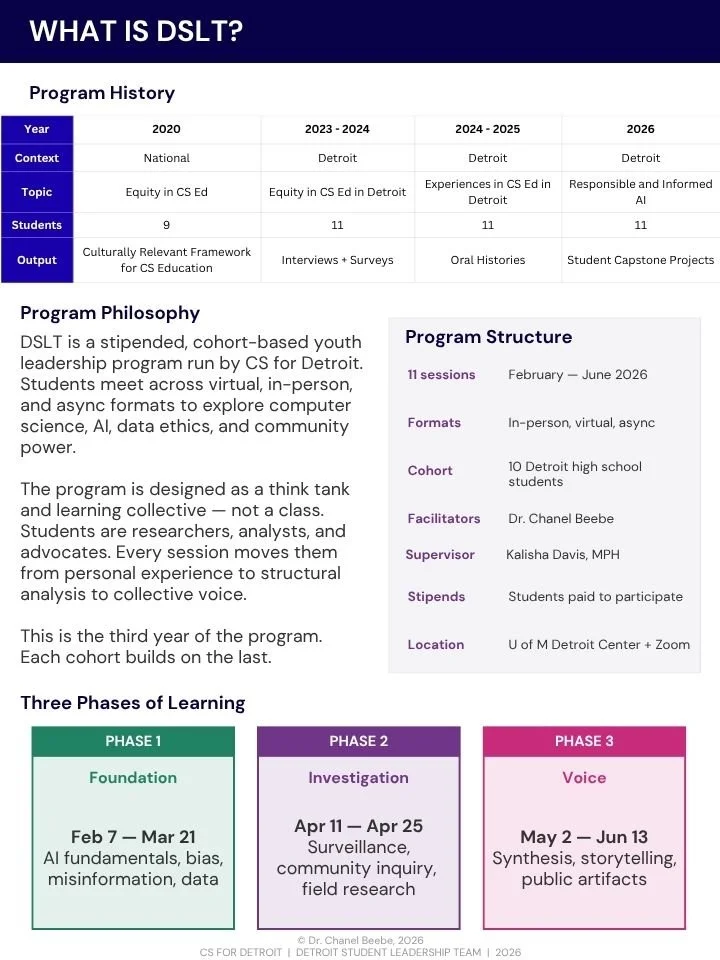
DSLT is a stipended, cohort-based youth leadership program run by CS for Detroit and facilitated by Dr. Chanel Beebe. Students meet in-person, virtually, and asynchronously to explore computer science, artificial intelligence, data ethics, and community power. Every session moves them from personal experience to structural analysis to collective voice.
This is the third year of the program. Each cohort builds on the last.
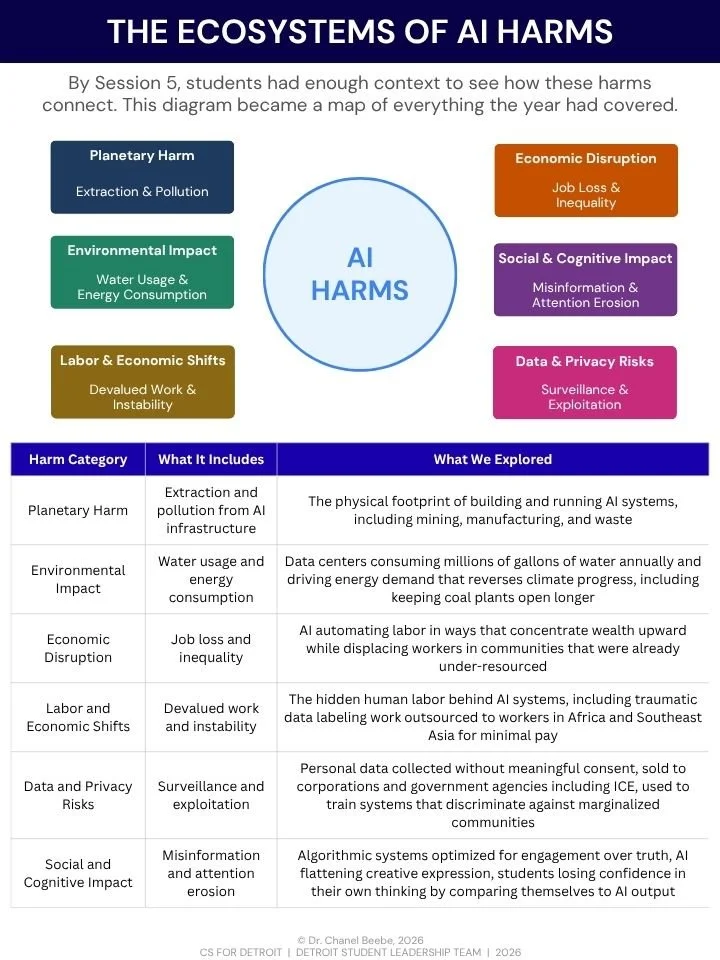
The questions we asked all year:
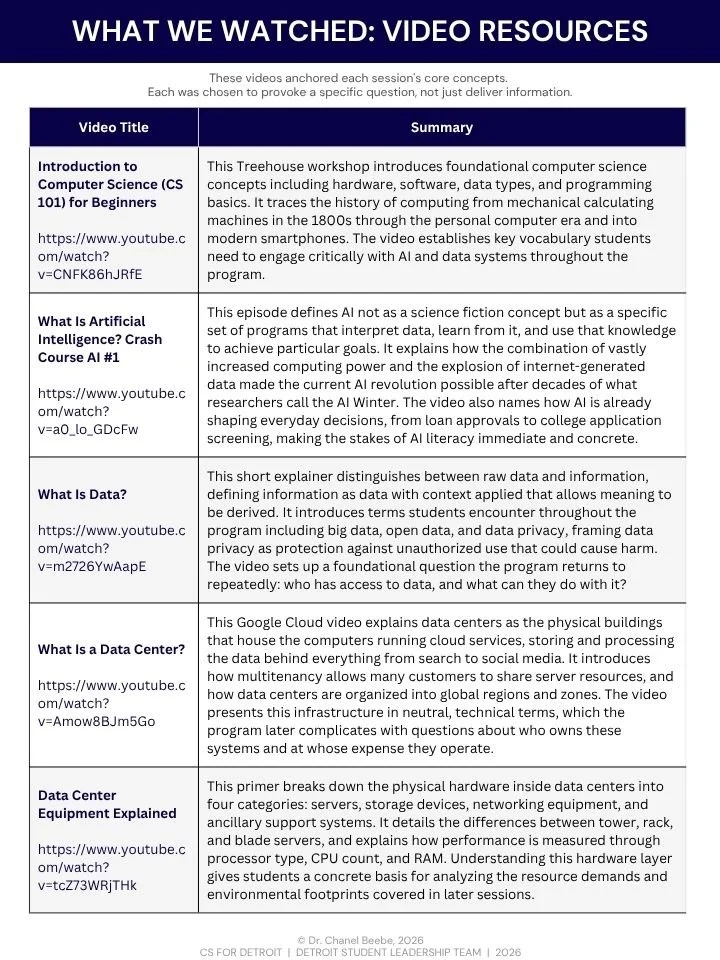
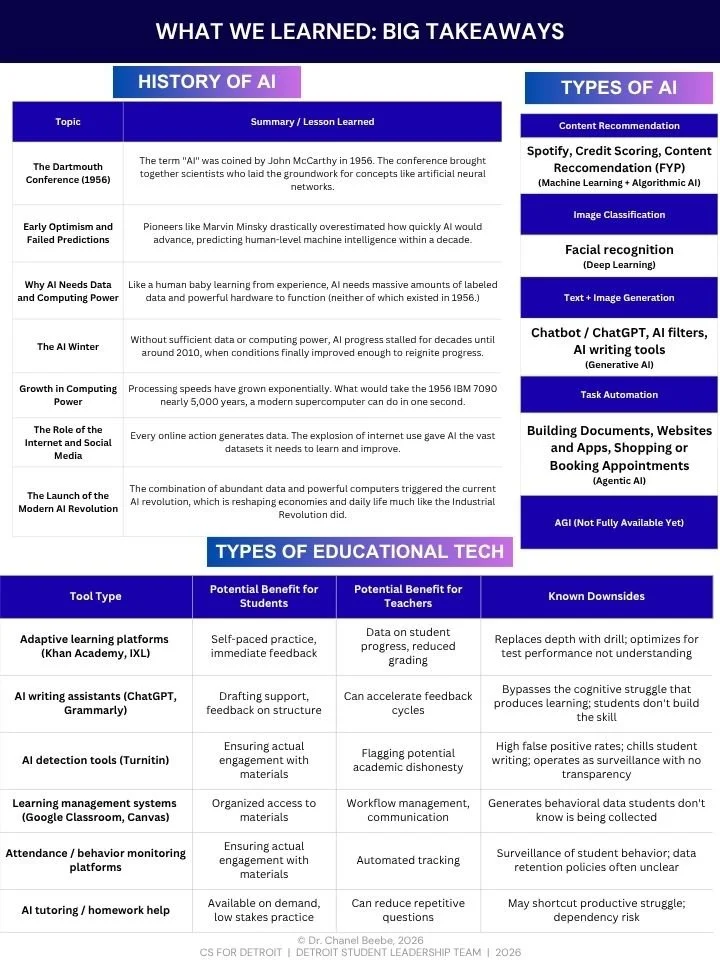
What is AI?
Where did it come from?
Who builds it?
Who funds it?
Who benefits?
And who bears the cost?
WHAT WE DID
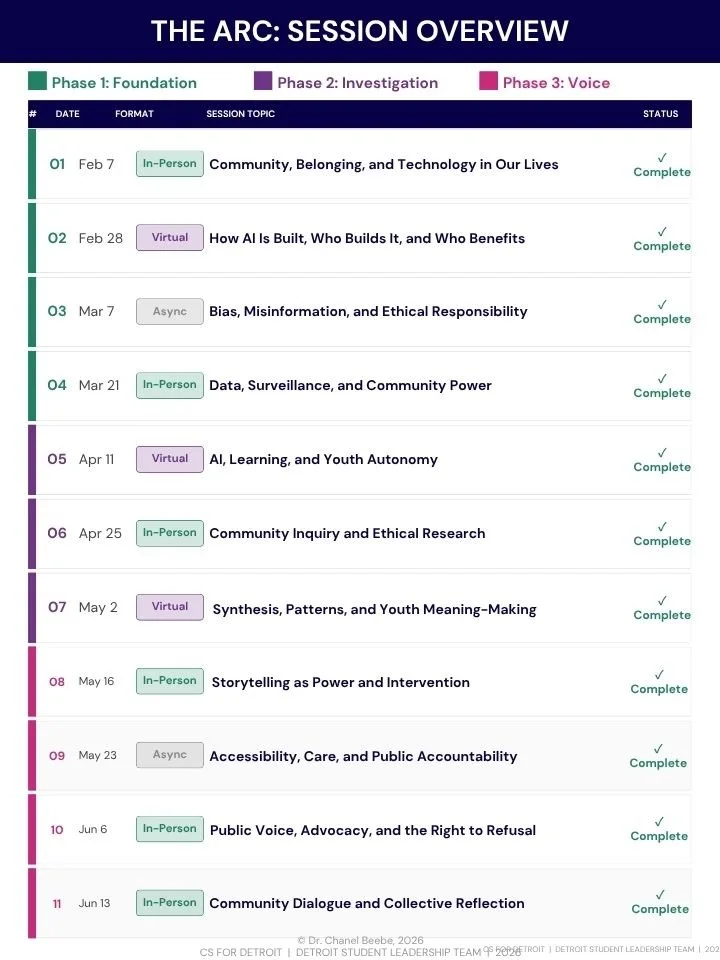
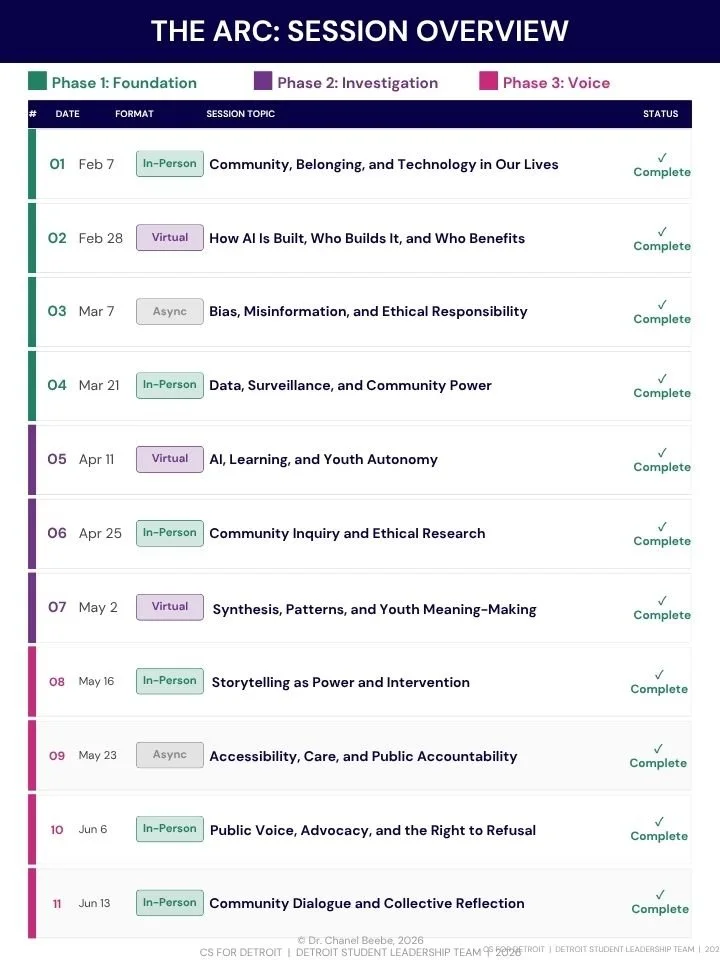
The 2026 cohort ran from February through June across eleven sessions. The program is designed as a think tank and learning collective, not a class. Students are researchers, analysts, and advocates.
This was the first year the program focused specifically on responsible and informed AI.
It was also taught on a compressed timeline, January through June instead of September through June, which meant everything had to move faster without losing depth. We did not cut the hard parts.
THREE PHASES OF LEARNING
Phase 1: Foundation
February 7 through March 21
AI fundamentals, bias, misinformation, dataPhase 2: Investigation
April 11 through April 25
Surveillance, community inquiry, field researchPhase 3: Voice
May 2 through June 13
Synthesis, storytelling, public artifacts
SEVEN GUEST VOICES
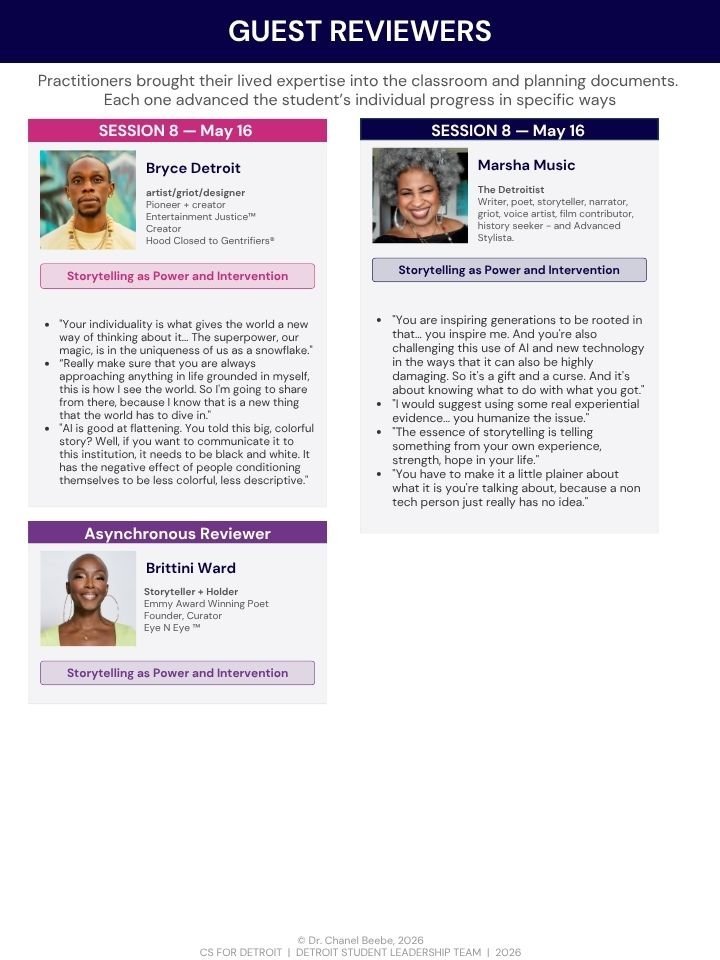
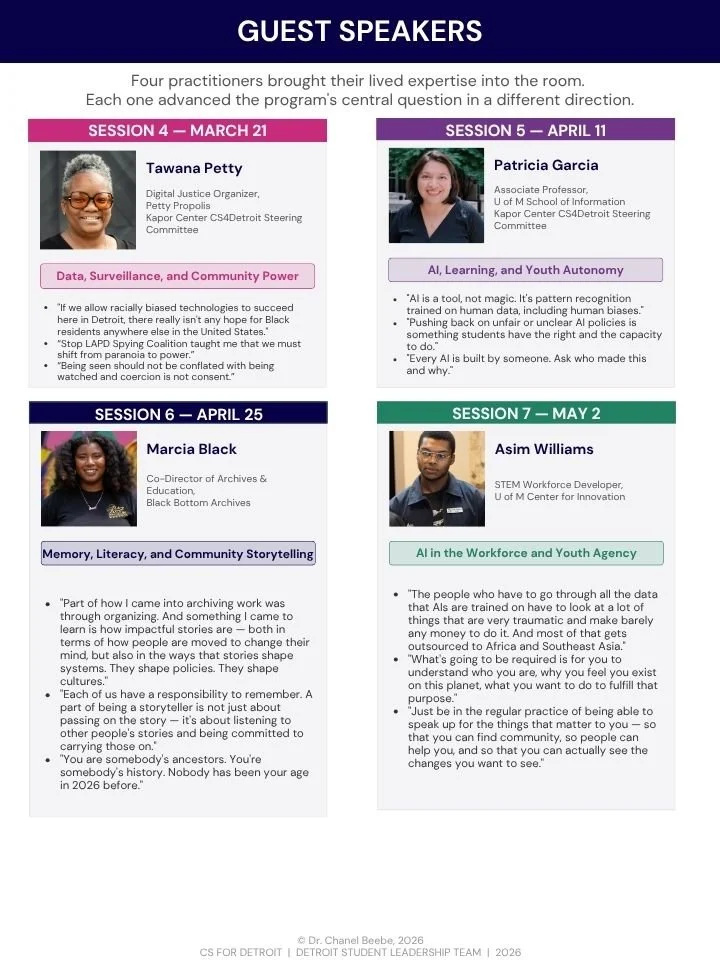
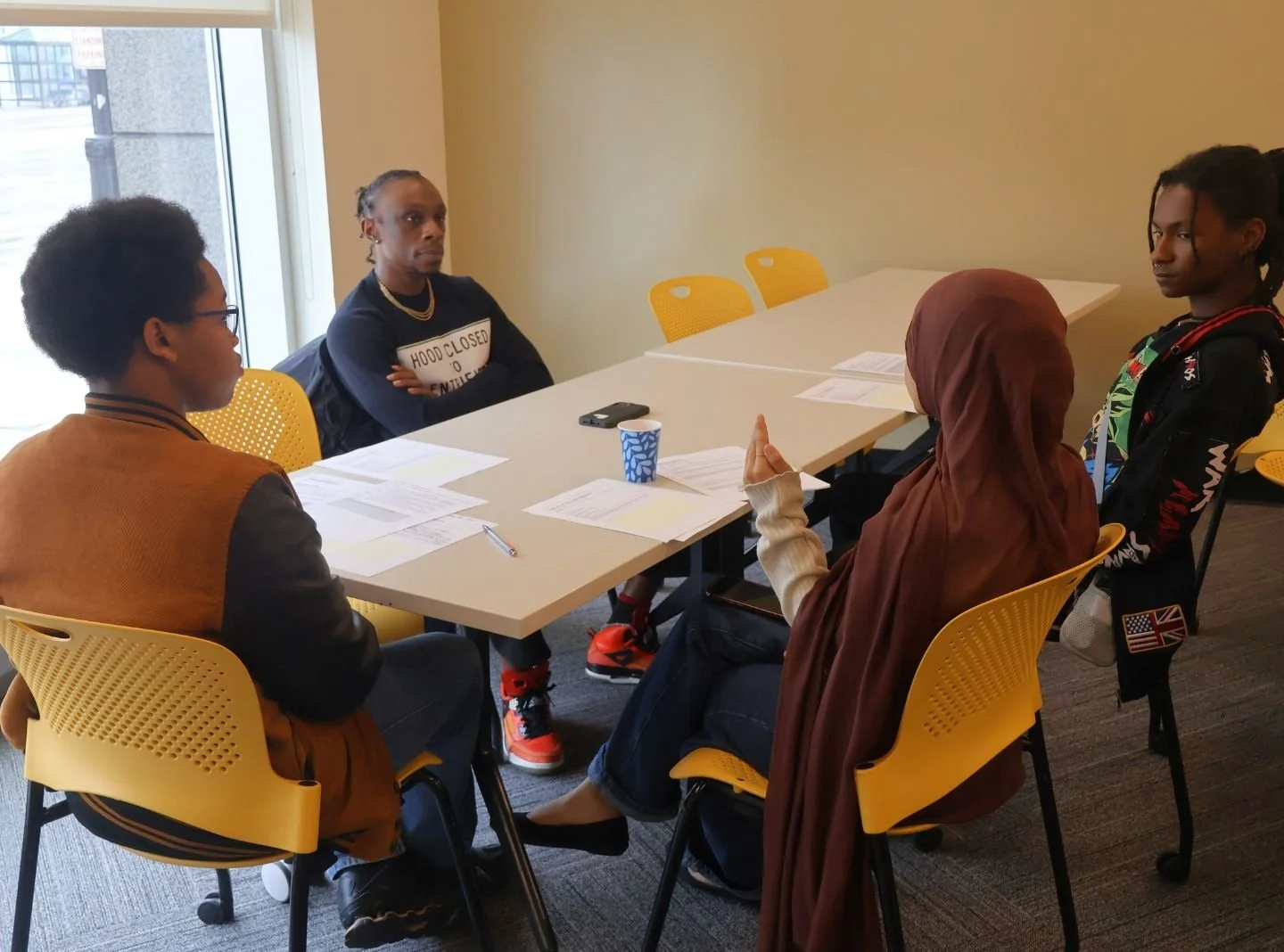
Four practitioners came to teach. Three came to review student work in progress. Every one of them brought lived expertise, not just credentials, into the room.
Guest Speakers:
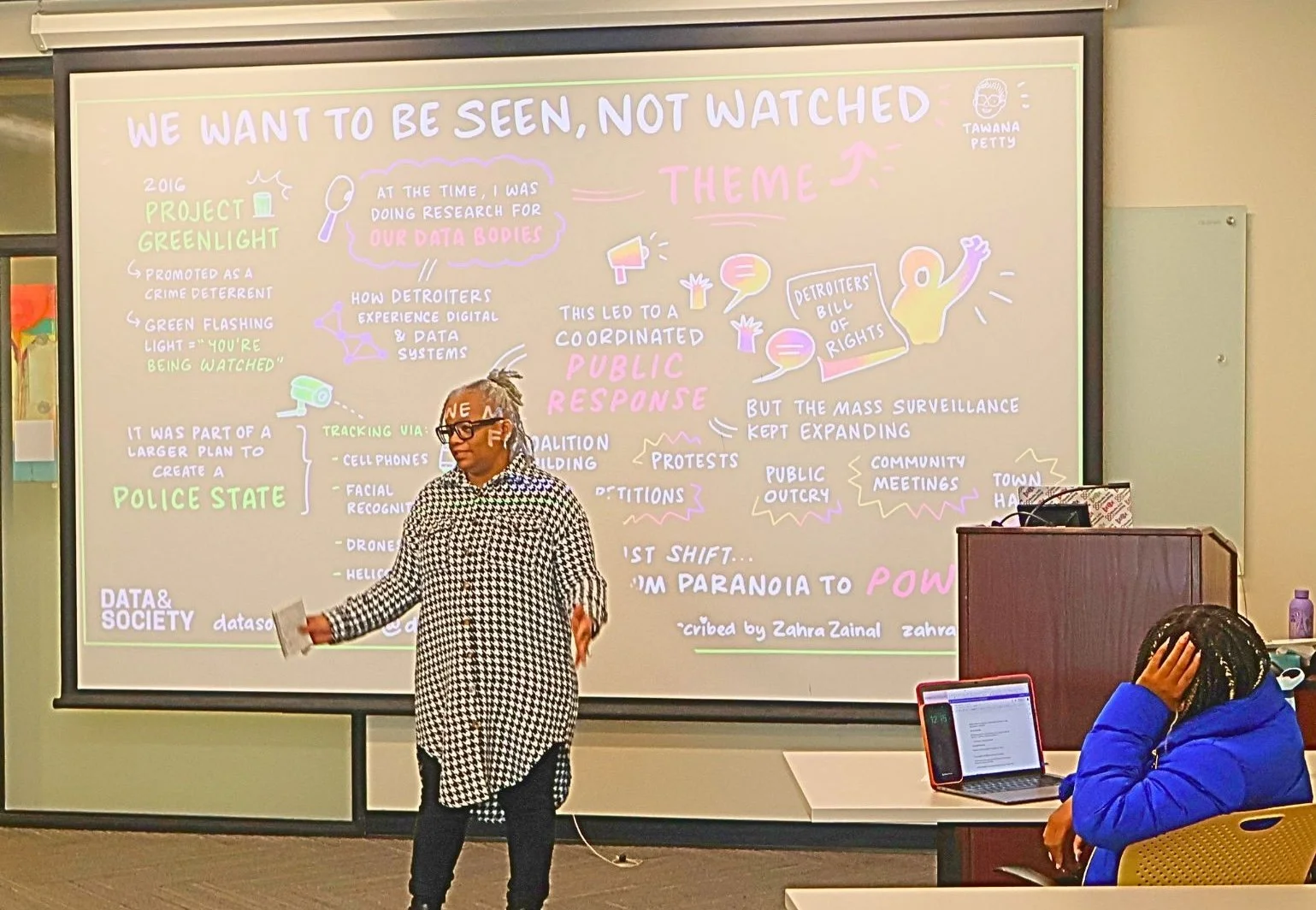
Tawana Petty, Digital Justice Organizer, Petty Propolis and Kapor Center CS4Detroit Steering Committee. Session 4: Data, Surveillance, and Community Power. "If we allow racially biased technologies to succeed here in Detroit, there really isn't any hope for Black residents anywhere else in the United States."
Patricia Garcia, Associate Professor, University of Michigan School of Information, Kapor Center CS4Detroit Steering Committee. Session 5: AI, Learning, and Youth Autonomy. "Every AI is built by someone. Ask who made this and why."
Marcia Black, Co-Director of Archives and Education, Black Bottom Archives. Session 6: Memory, Literacy, and Community Storytelling. "You are somebody's ancestors. You're somebody's history. Nobody has been your age in 2026 before."
Asim Williams, STEM Workforce Developer, University of Michigan Center for Innovation. Session 7: AI in the Workforce and Youth Agency. "What's going to be required is for you to understand who you are, why you feel you exist on this planet, what you want to do to fulfill that purpose."
Guest Reviewers:
Bryce Detroit, artist, griot, designer, Pioneer and creator of Entertainment Justice and Hood Closed to Gentrifiers. Session 8: Storytelling as Power and Intervention. "AI is good at flattening. You told this big, colorful story? Well, if you want to communicate it to this institution, it needs to be black and white. It has the negative effect of people conditioning themselves to be less colorful, less descriptive."
Marsha Music, The Detroitist, writer, poet, storyteller, griot, voice artist, film contributor, history seeker, and Advanced Stylista. Session 8: Storytelling as Power and Intervention. "The essence of storytelling is telling something from your own experience, strength, hope in your life."
Brittini Ward, Emmy Award Winning Poet, Founder and Curator of Eye N Eye. Asynchronous Reviewer: Storytelling as Power and Intervention.
WHAT STUDENTS OBSERVED: FIELD RESEARCH
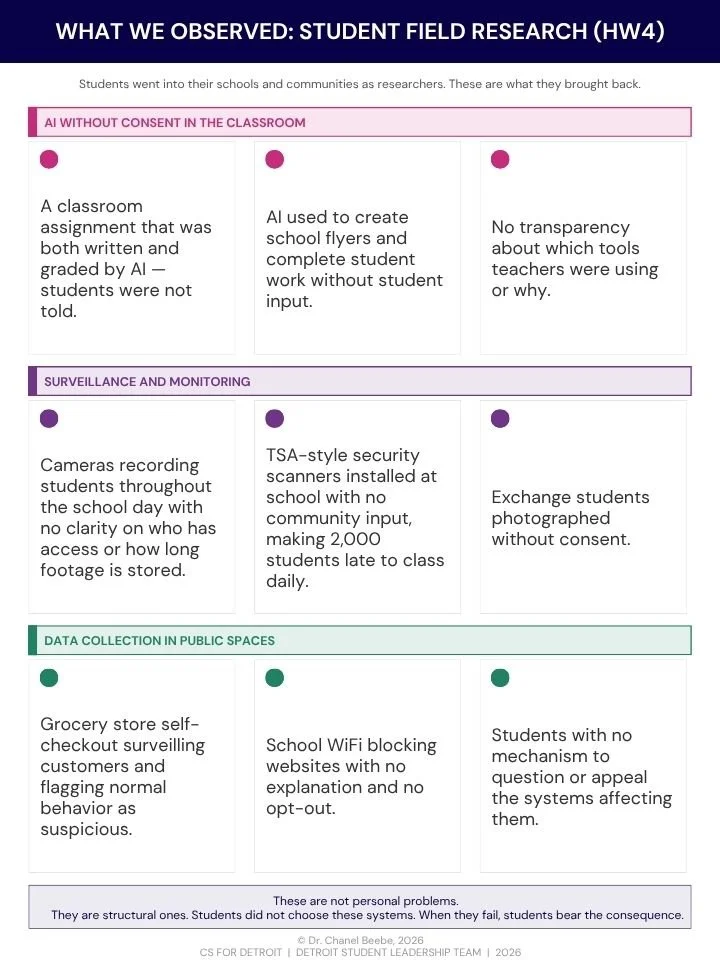
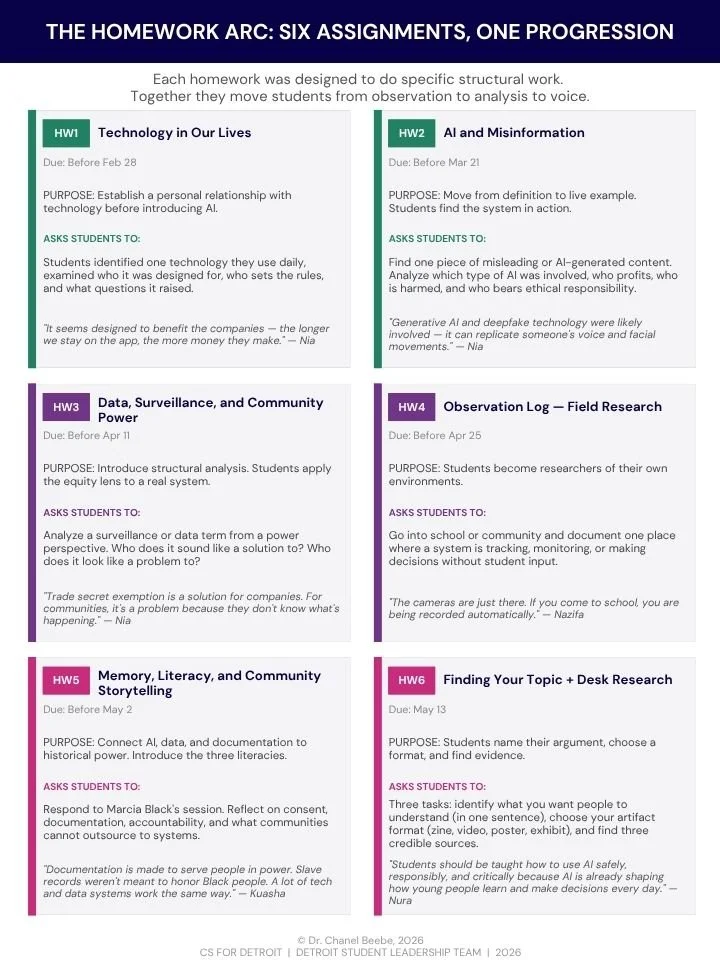
For Homework 4, students went into their schools and communities as researchers. They documented one place where a system was tracking, monitoring, or making decisions without student input. These are what they brought back.
AI Without Consent in the Classroom
A classroom assignment that was both written and graded by AI. Students were not told.
AI used to create school flyers and complete student work without student input.
No transparency about which tools teachers were using or why.
Surveillance and Monitoring
Cameras recording students throughout the school day with no clarity on who has access or how long footage is stored.
TSA-style security scanners installed at school with no community input, making 2,000 students late to class daily.
Exchange students photographed without consent.
Data Collection in Public Spaces
Grocery store self-checkout surveilling customers and flagging normal behavior as suspicious.
School WiFi blocking websites with no explanation and no opt-out.
Students with no mechanism to question or appeal the systems affecting them.
These are not personal problems. They are structural ones. Students did not choose these systems. When they fail, students bear the consequence.
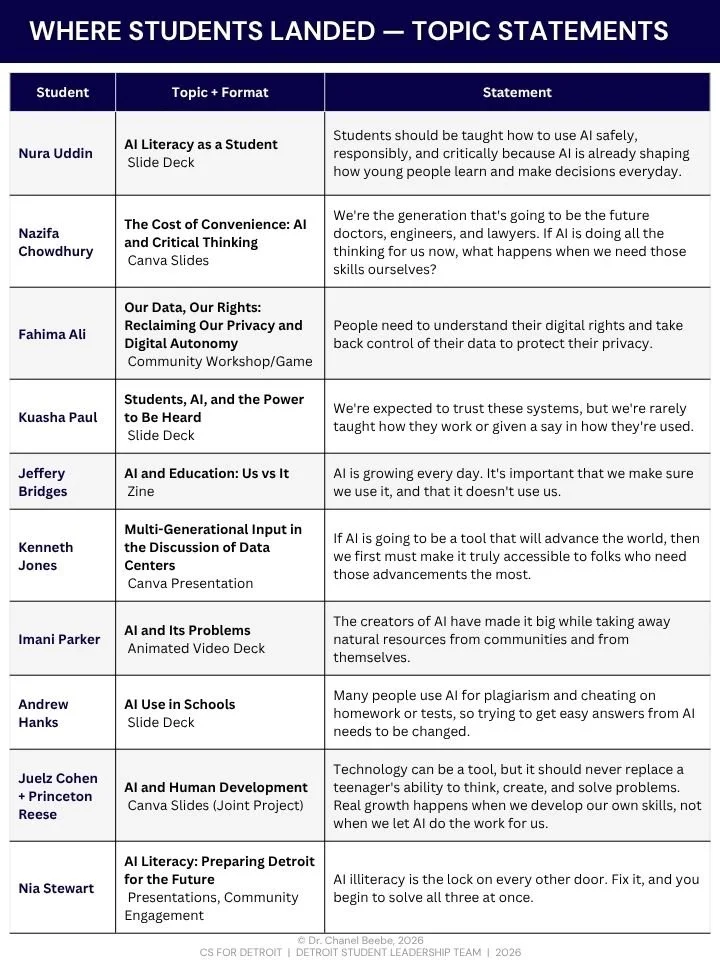
WHERE STUDENTS LANDED: TOPIC STATEMENTS
Each student identified one argument, chose a format to make it public, and found evidence. These are the positions they arrived at after five months of research.
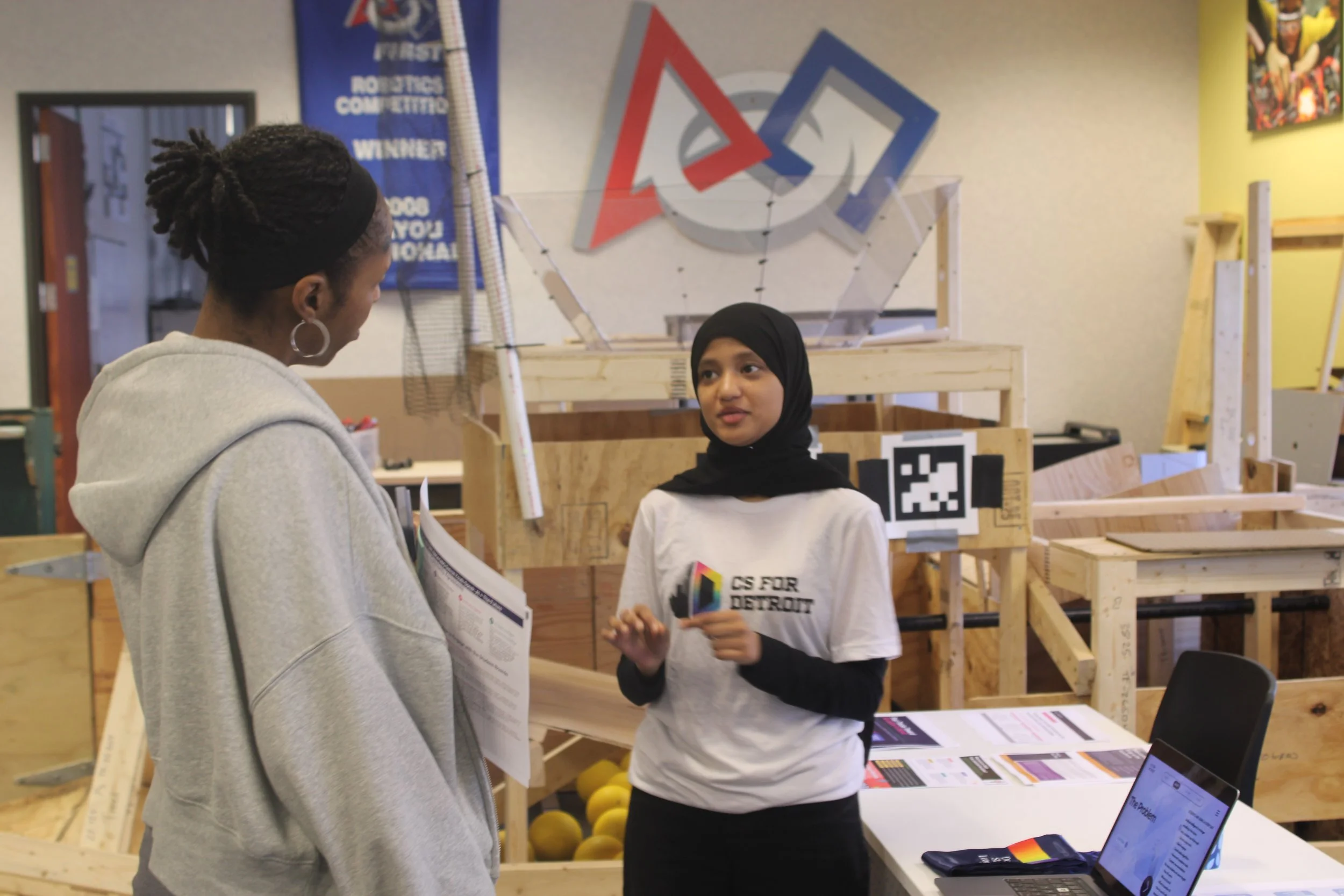
Nura Uddin, AI Literacy as a Student, Slide Deck: Students should be taught how to use AI safely, responsibly, and critically because AI is already shaping how young people learn and make decisions every day.
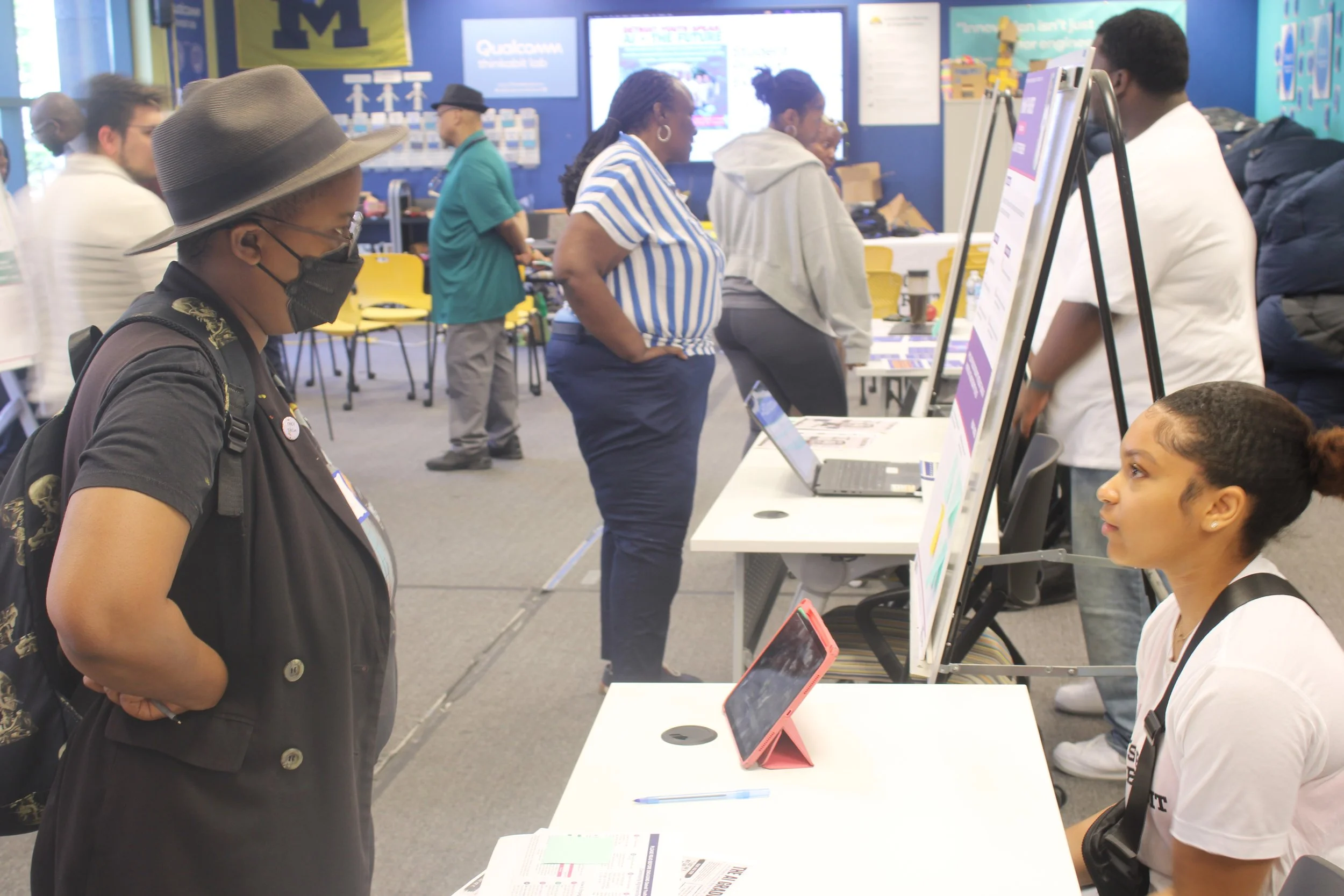
Imani Parker, AI and Its Problems, Animated Video Deck: The creators of AI have made it big while taking away natural resources from communities and from themselves.
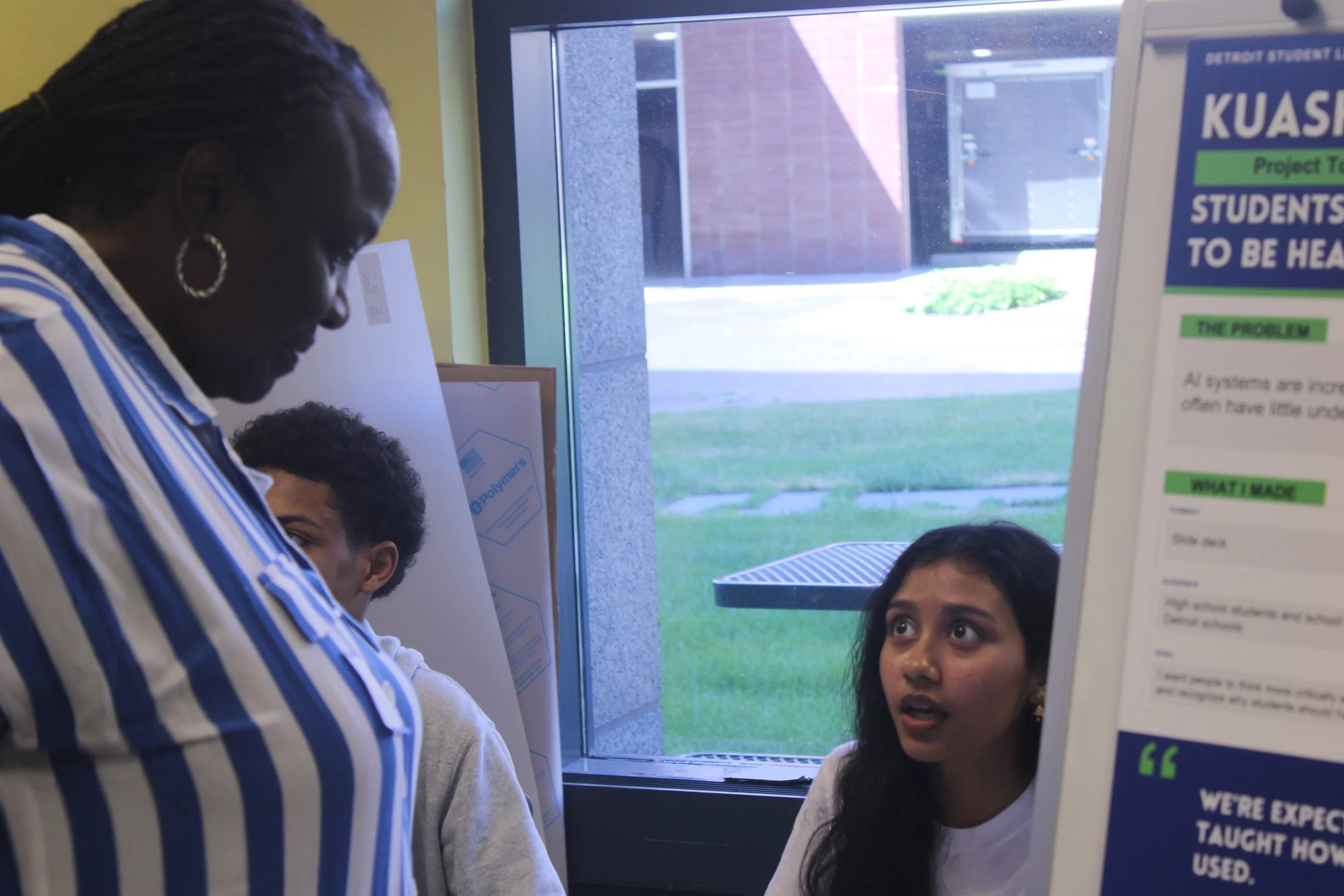
Kuasha Paul, Students, AI, and the Power to Be Heard, Slide Deck: We're expected to trust these systems, but we're rarely taught how they work or given a say in how they're used.
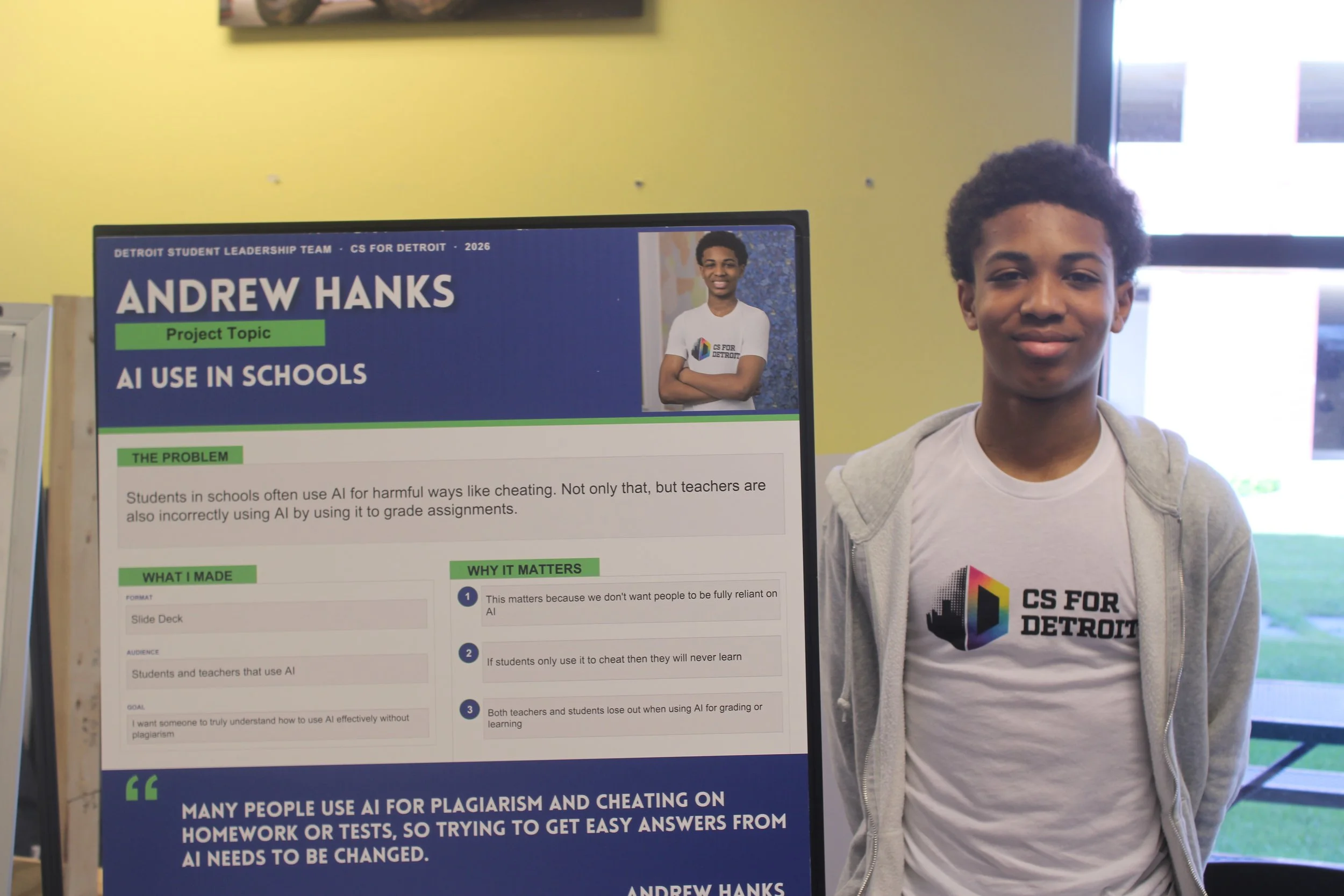
Andrew Hanks, AI Use in Schools, Slide Deck: Many people use AI for plagiarism and cheating on homework or tests, so trying to get easy answers from AI needs to be changed.
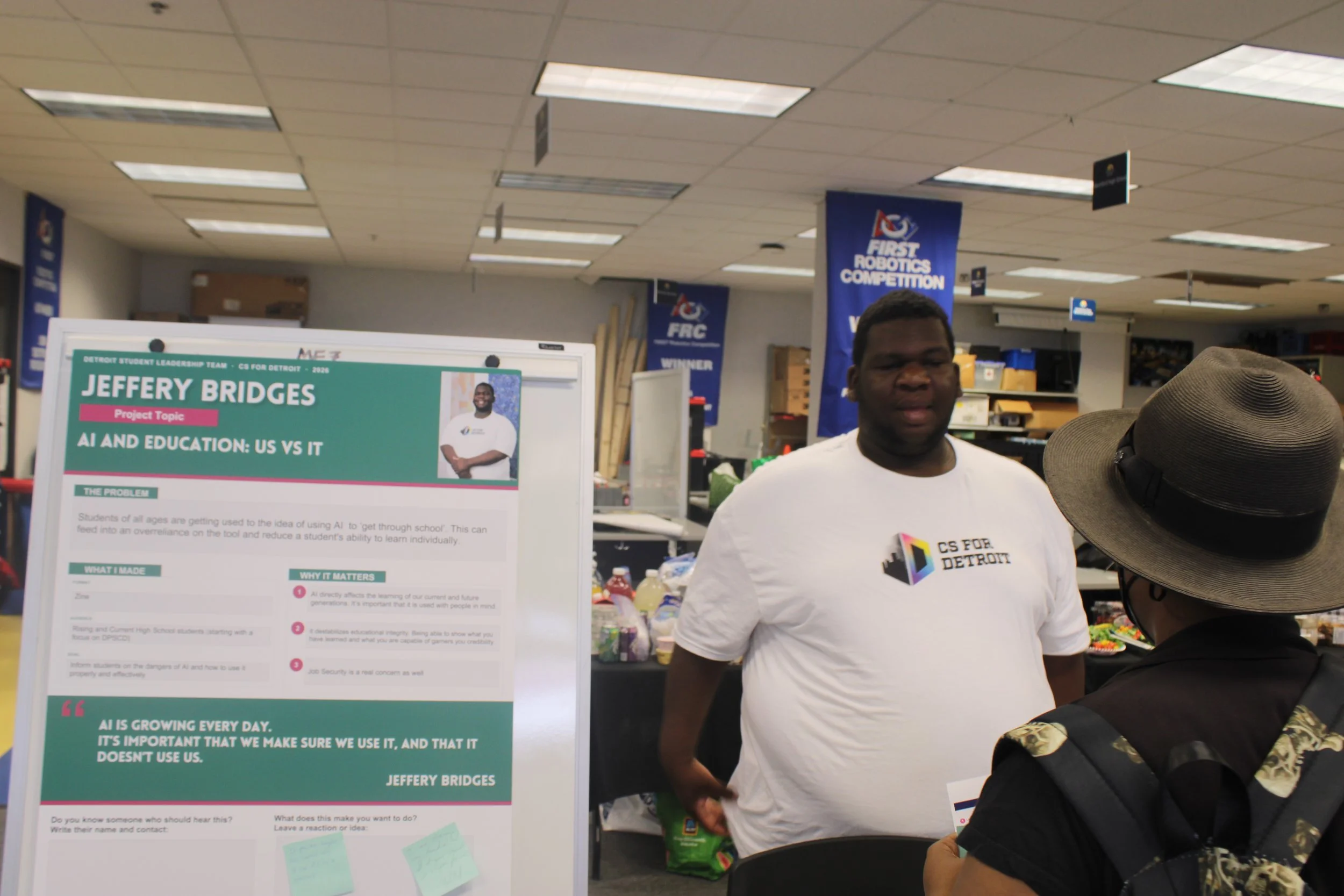
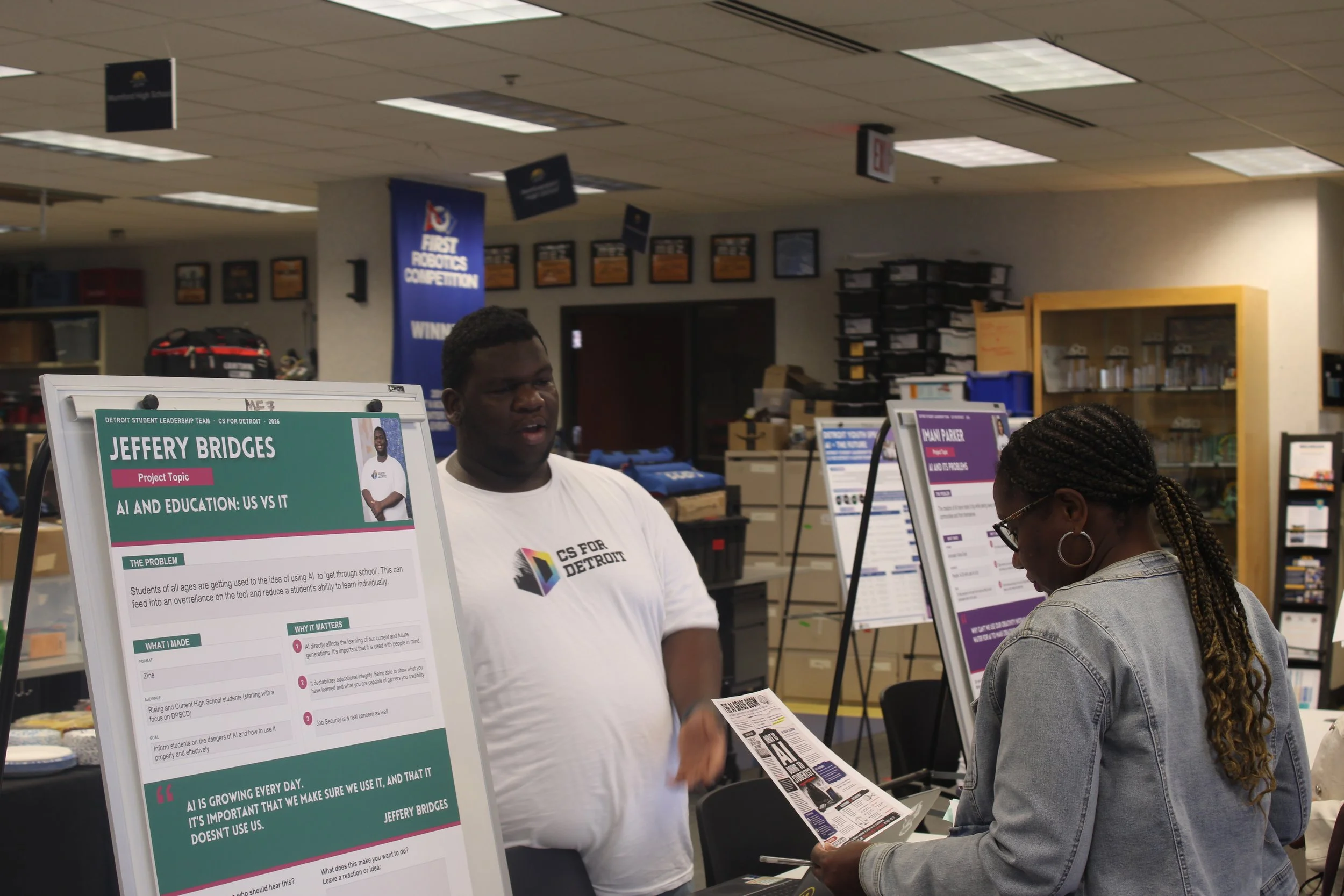
Jeffery Bridges, AI and Education: Us vs It, Zine: AI is growing every day. It's important that we make sure we use it, and that it doesn't use us.
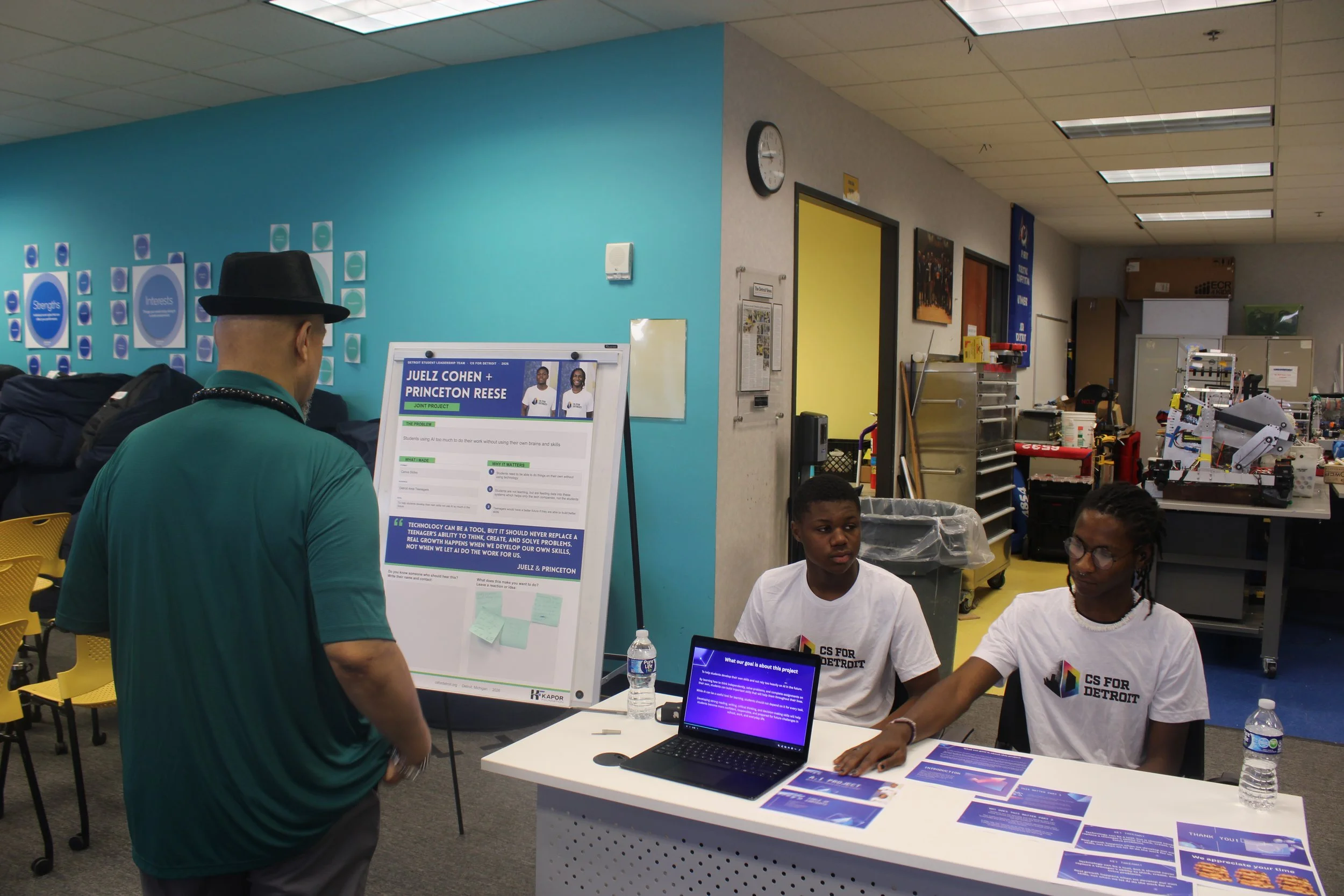
Juelz Cohen and Princeton Reese, AI and Human Development, Canva Slides, Joint Project: Technology can be a tool, but it should never replace a teenager's ability to think, create, and solve problems. Real growth happens when we develop our own skills, not when we let AI do the work for us.
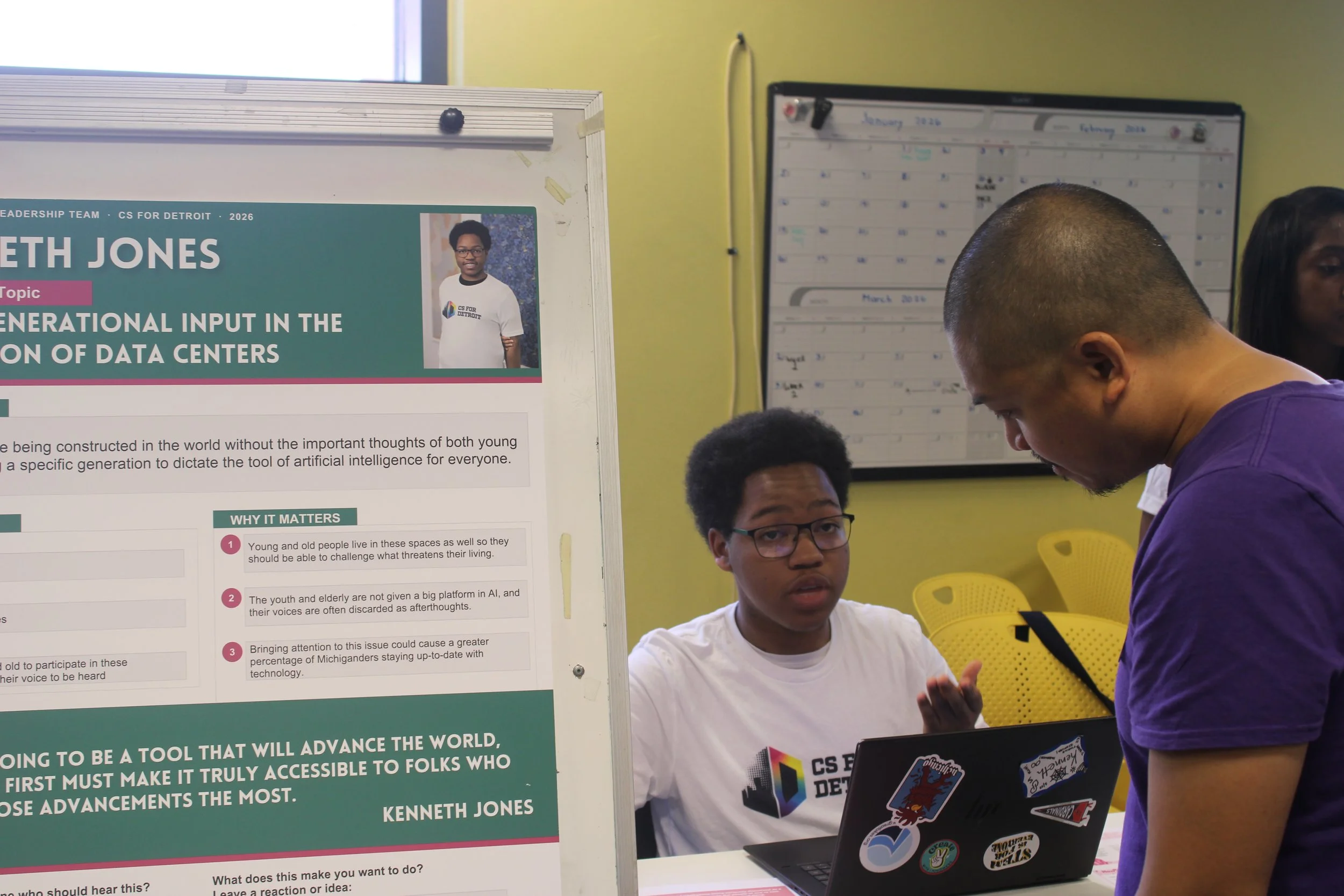
Kenneth Jones, Multi-Generational Input in the Discussion of Data Centers, Canva Presentation: If AI is going to be a tool that will advance the world, then we first must make it truly accessible to folks who need those advancements the most.
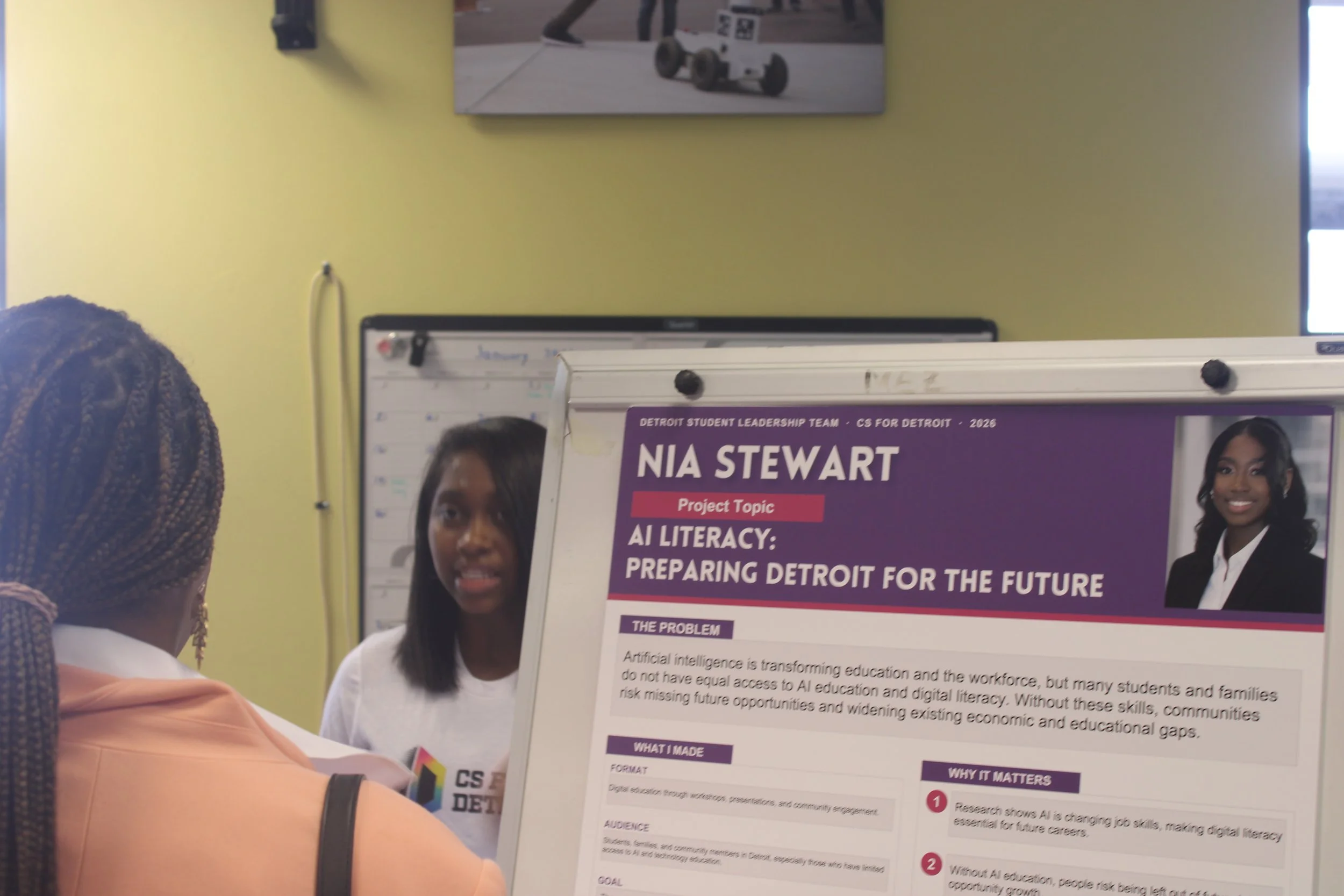
Nia Stewart, AI Literacy: Preparing Detroit for the Future, Presentations and Community Engagement: AI illiteracy is the lock on every other door. Fix it, and you begin to solve all three at once.
RESOURCES FOR PARTICIPANTS AND COMMUNITY
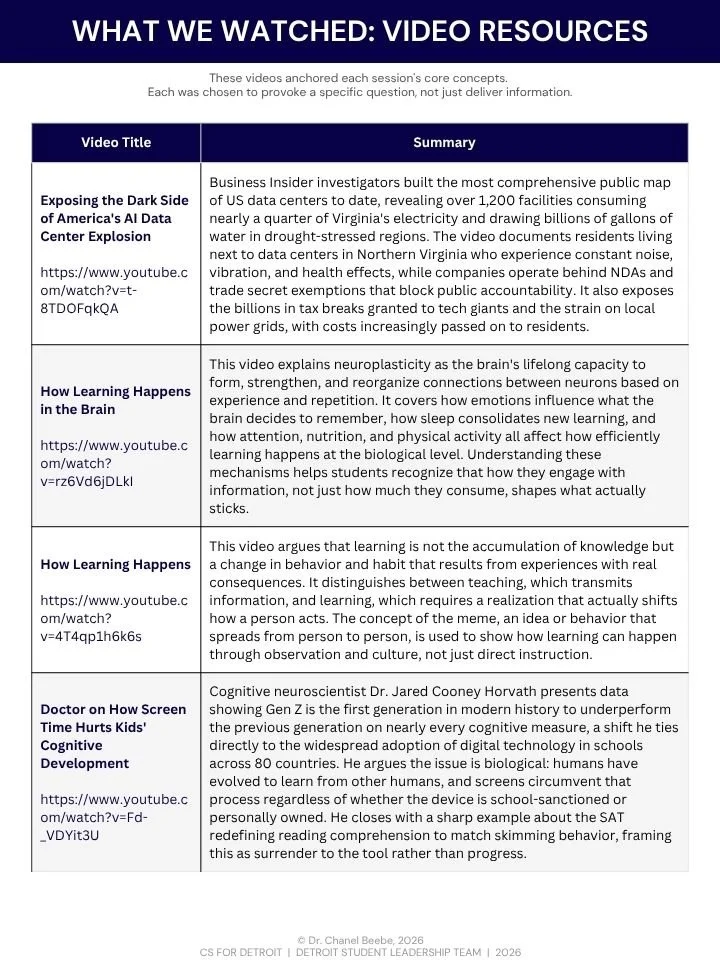
These resources were developed for and used throughout the 2026 DSLT program. They are offered here for anyone who wants to go deeper.
DSLT 2026 Curriculum Overview and Year in Review