CS4Detroit Student Leadership Team (DSLT)
Context
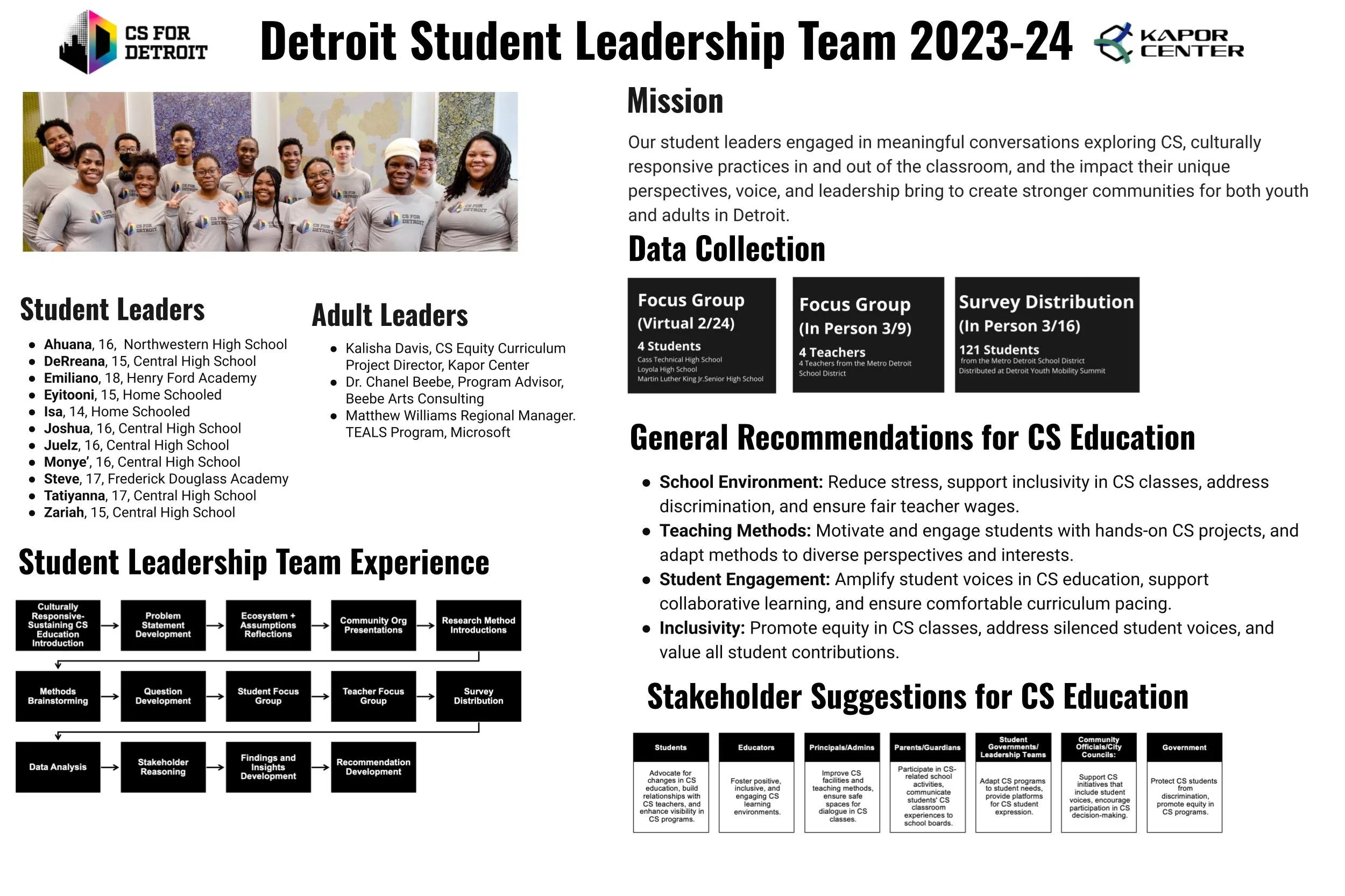
While Detroit has seen increased investment in computer science (CS) education, many programs lack direct student input into their design, priorities, or impact metrics. The CS4Detroit Student Leadership Team (DSLT) was created to address that gap—training high school students as researchers, designers, and advocates for equity in CS education across Metro Detroit.
Challenge
Build a sustainable and meaningful structure for high school students to investigate systemic inequities in computer science education—then influence decision-makers using their findings.


In partnership with CS4Detroit, Beebe Arts LLC
Designed and facilitated DSLT’s inaugural cohort structure
Trained students in research ethics, interview design, data analysis, and storytelling
Guided youth through conducting interviews with educators, students, and community stakeholders
Created tools for data visualization and systems mapping, used in community presentations
Supported students in building action plans and presenting findings.

Program Highlights
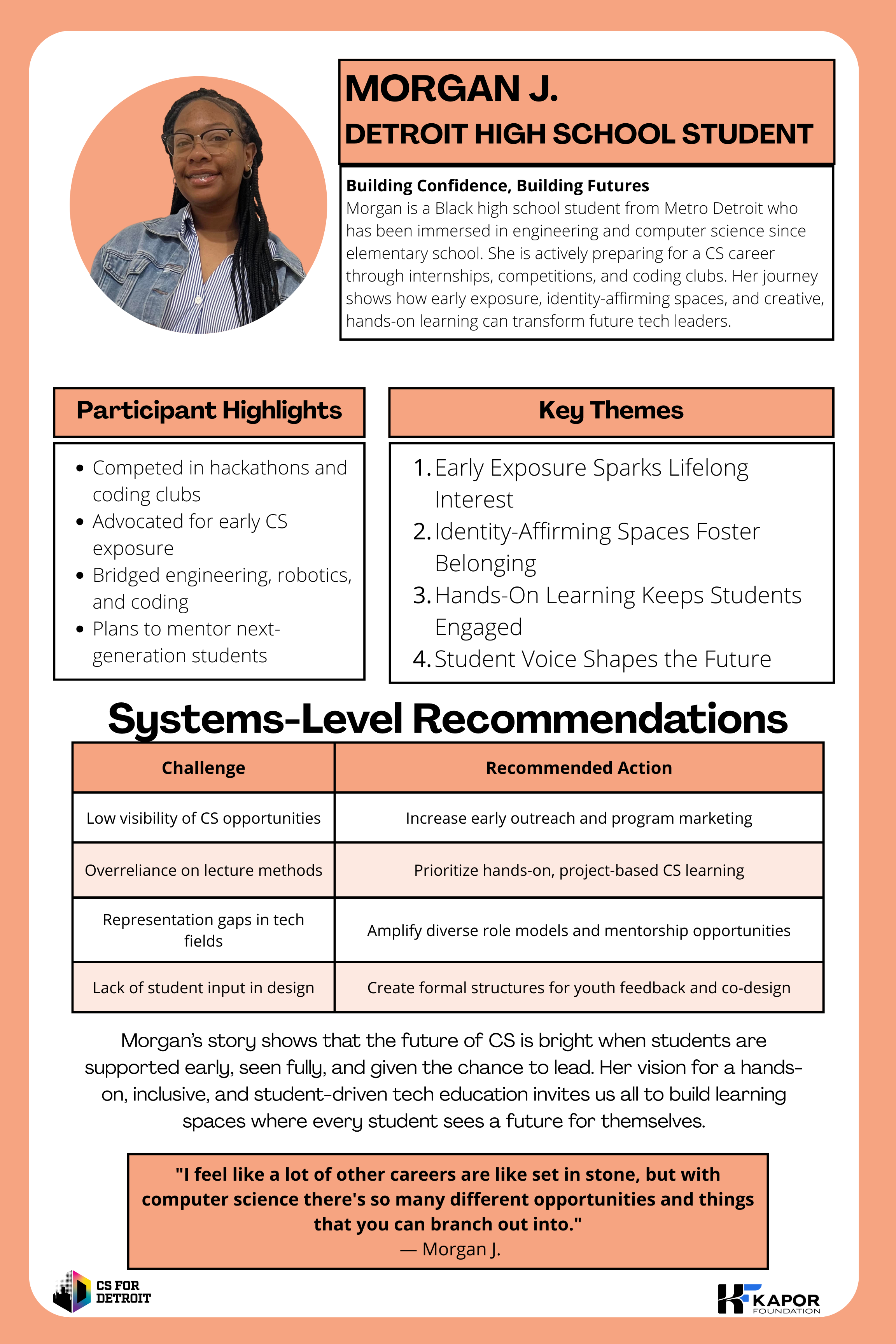
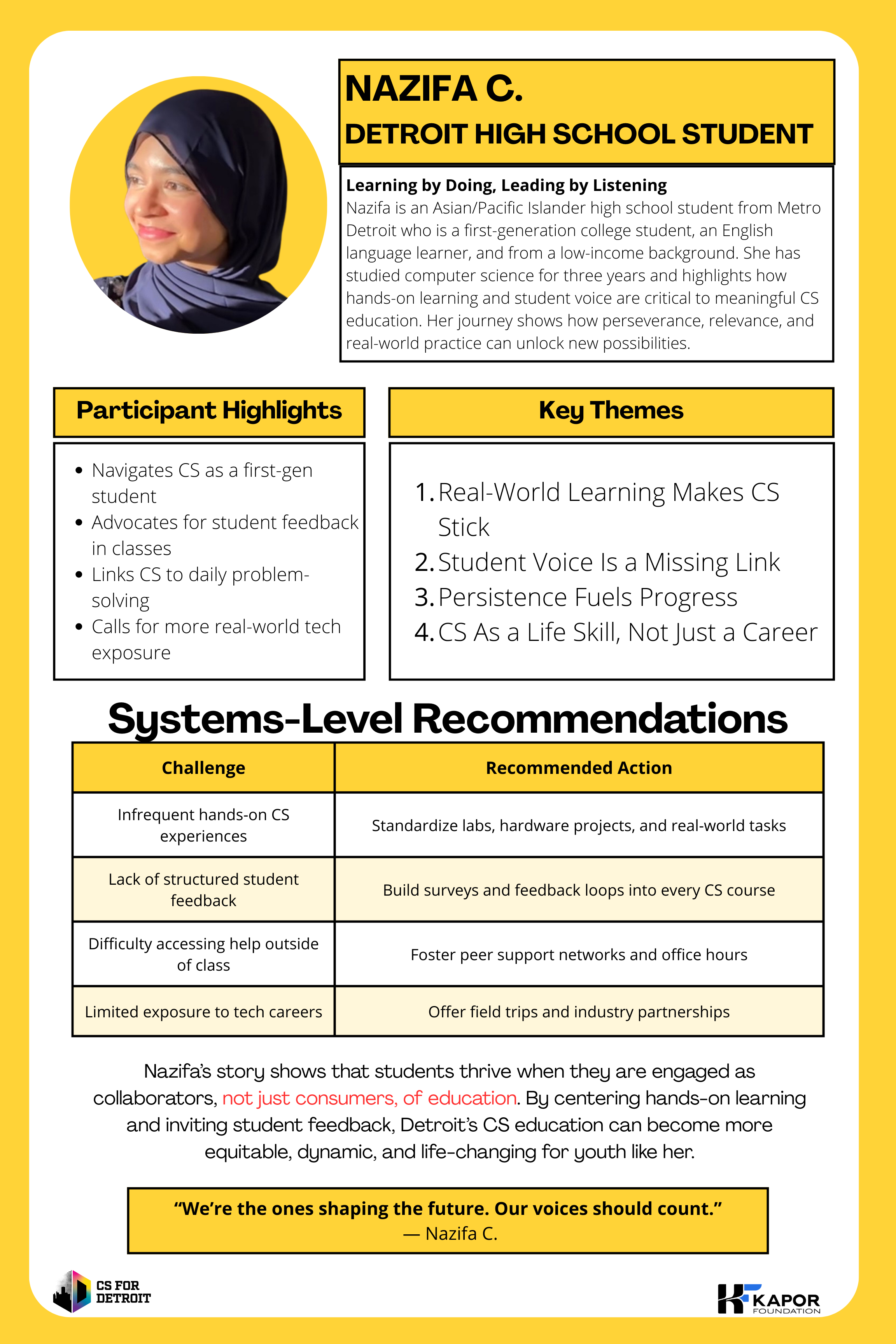
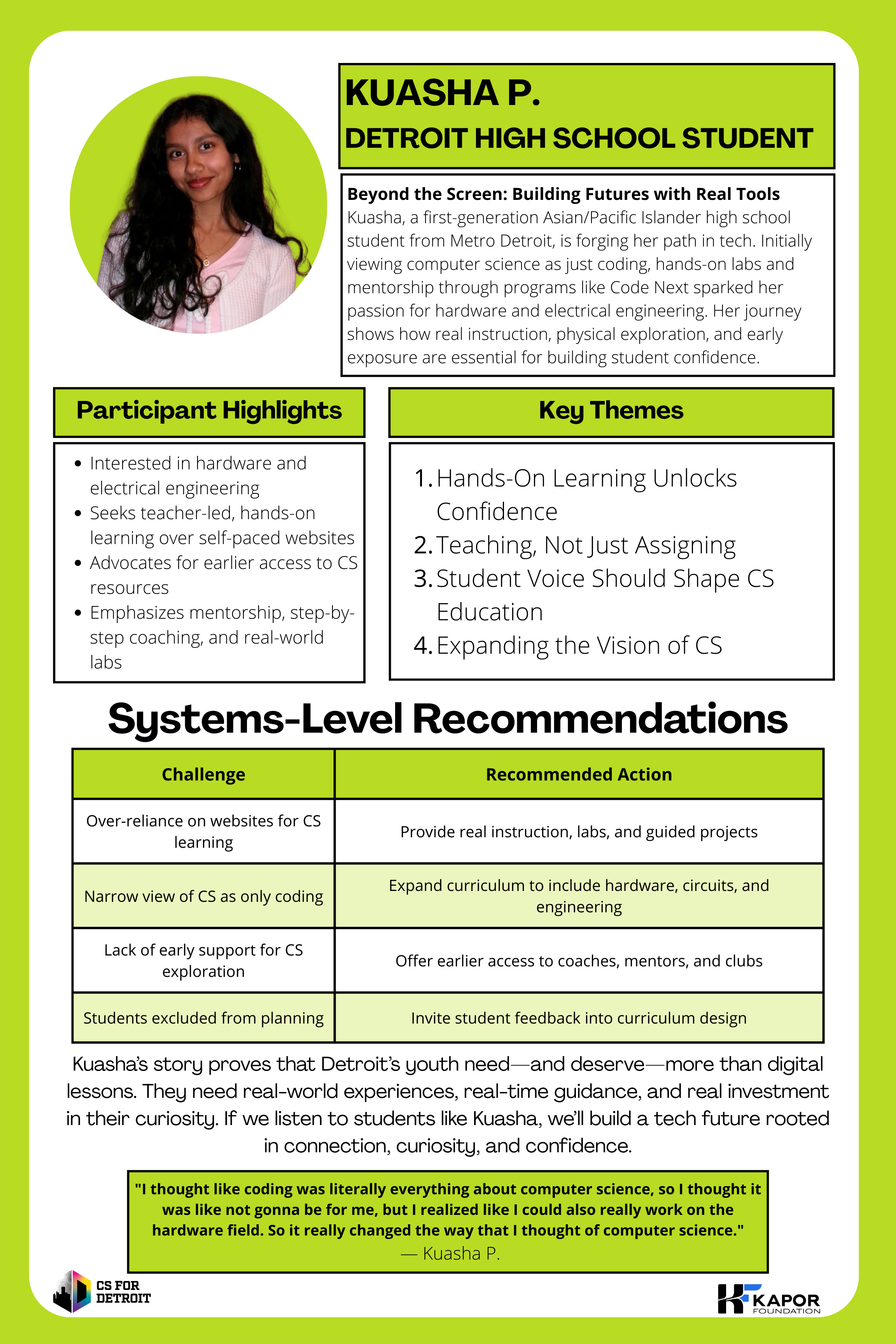
Students developed original research questions about access, teacher bias, curriculum design, and representation in CS
Interviews were conducted with stakeholders from schools, nonprofit orgs, and tech institutions
Insights were synthesized into themes like “relevance of curriculum,” “peer stereotypes,” and “teacher encouragement as access”
Students presented their research and solutions at a citywide convening of educators, funders, and tech leaders

2023 -2024 Results
11 students trained in participatory research and systems thinking
30+ interviews conducted across Detroit’s education and tech landscape
Youth-designed action plans focused on improving curriculum relevance, access to dual enrollment, and peer mentorship
CS4Detroit is now using DSLT findings to inform educator trainings and funding priorities
2023 - 2024 Research Findings
-
![]()
Overall Research Poster
-
![]()
Team 1 Poster
-
![]()
Team 2 Poster
-
![]()
Team 3 Poster
-
![]()
Team 4 Poster


2024-2025 Overview
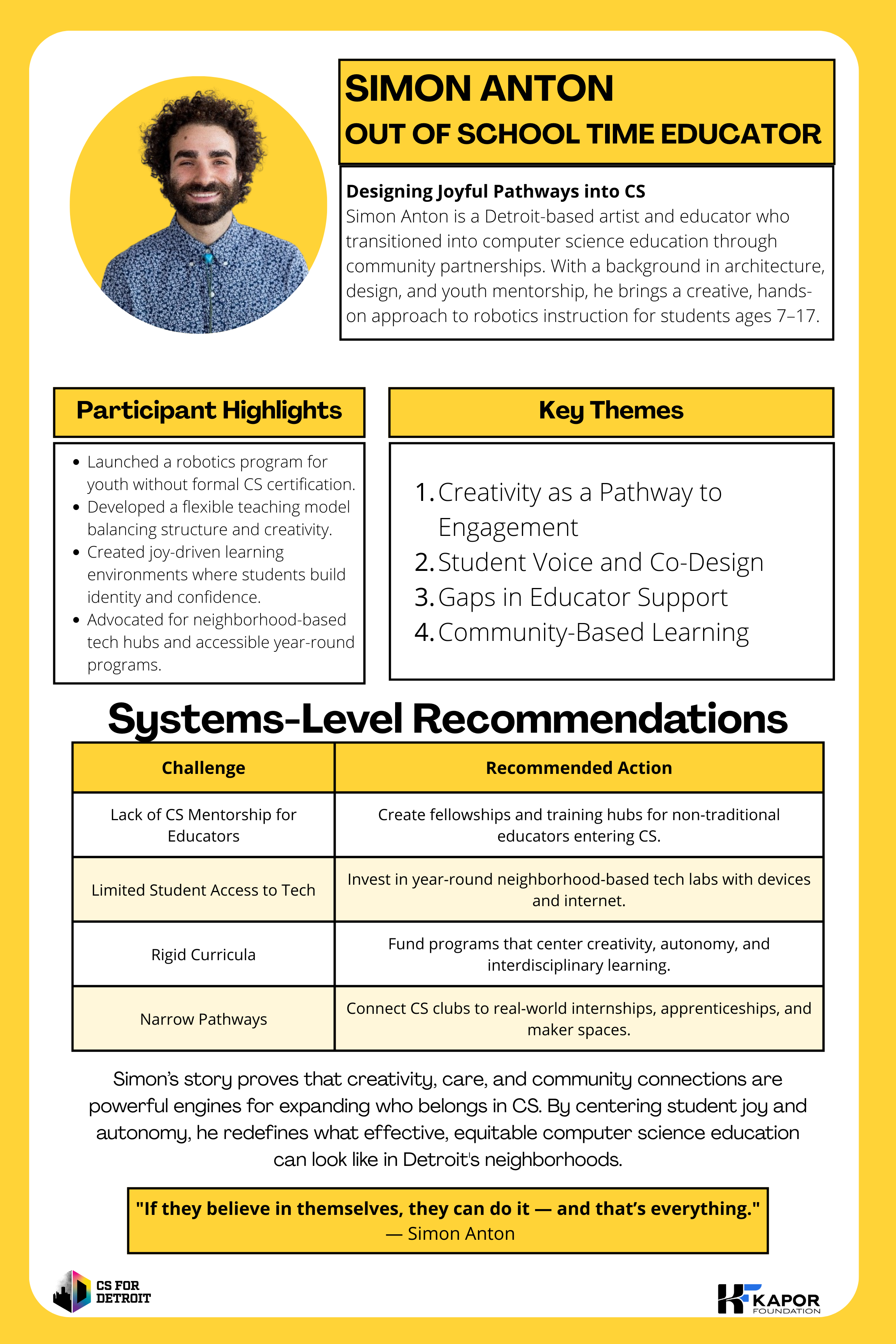
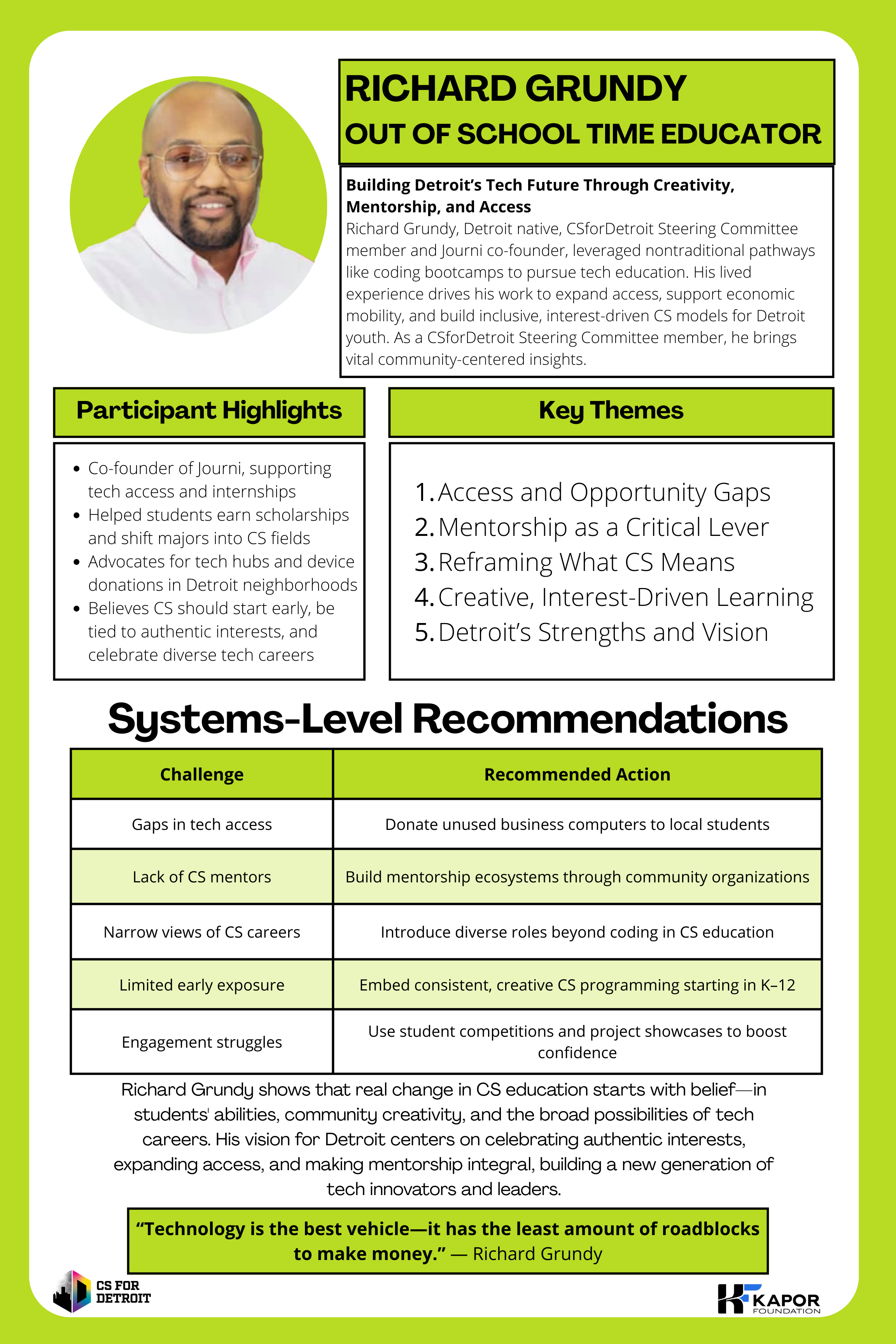
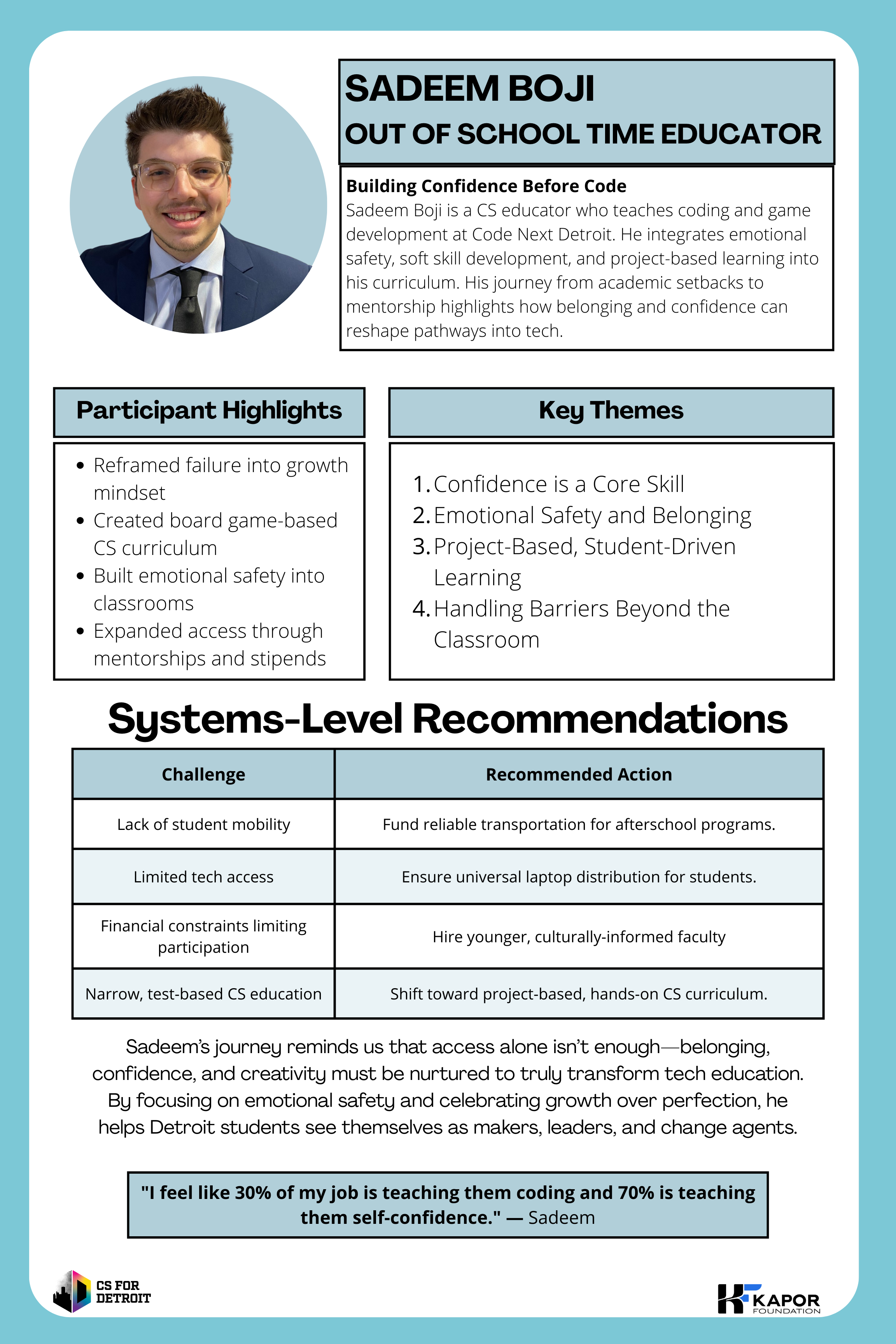
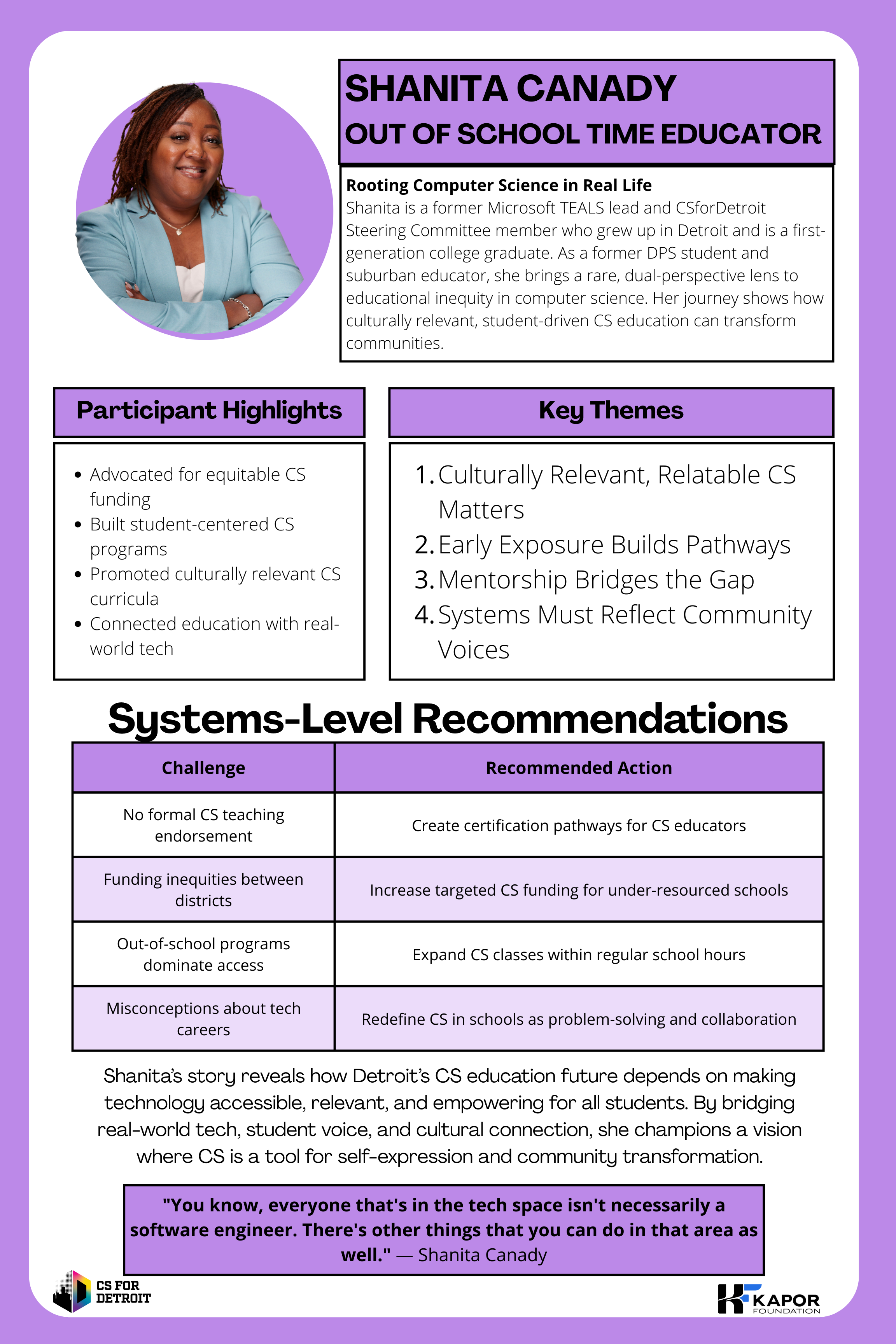
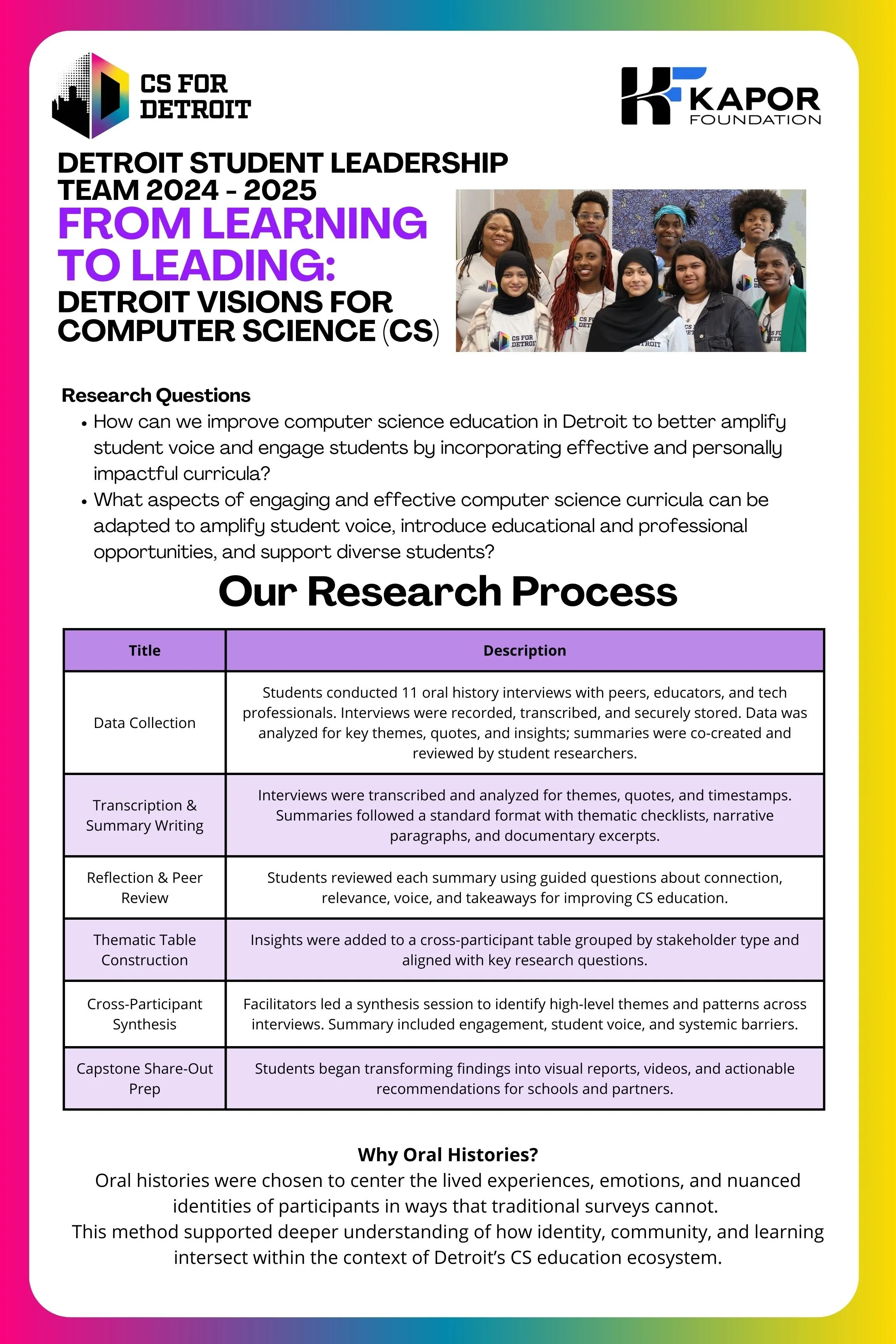
From October 2024 to June 2025, the Detroit Student Leadership Team (DSLT) designed and conducted a research project to explore how K12 computer science (CS) education in Detroit could better serve students, especially those whose voices are often left out of curriculum design and policy decisions. Guided by Dr. Chanel Beebe, the project centered youth as researchers and used oral history interviews to document lived experiences across the CS education ecosystem.
Research Question
How can we improve computer science education in Detroit to better amplify student voice and engage students by incorporating effective and personally impactful curricula?
Methodology
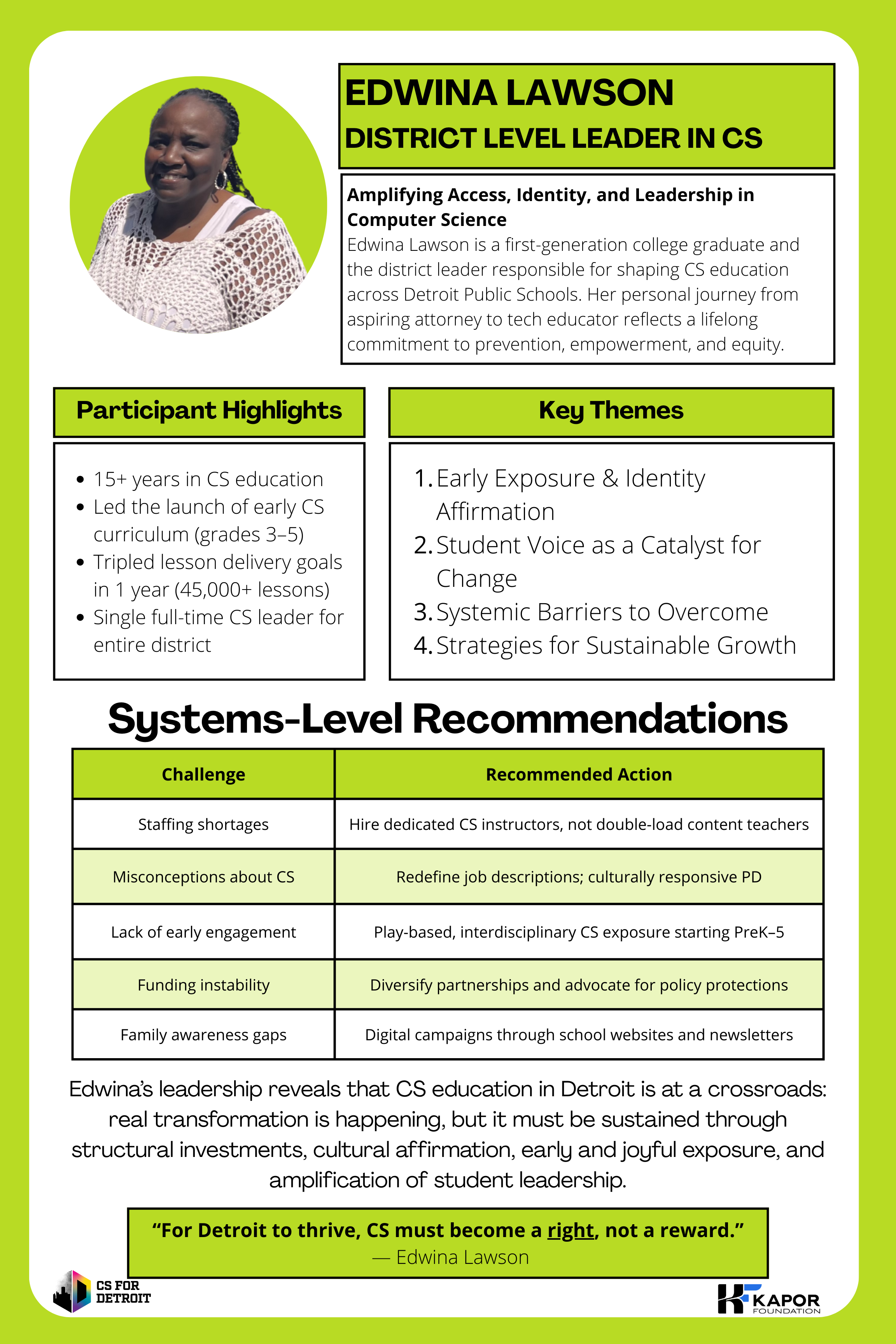
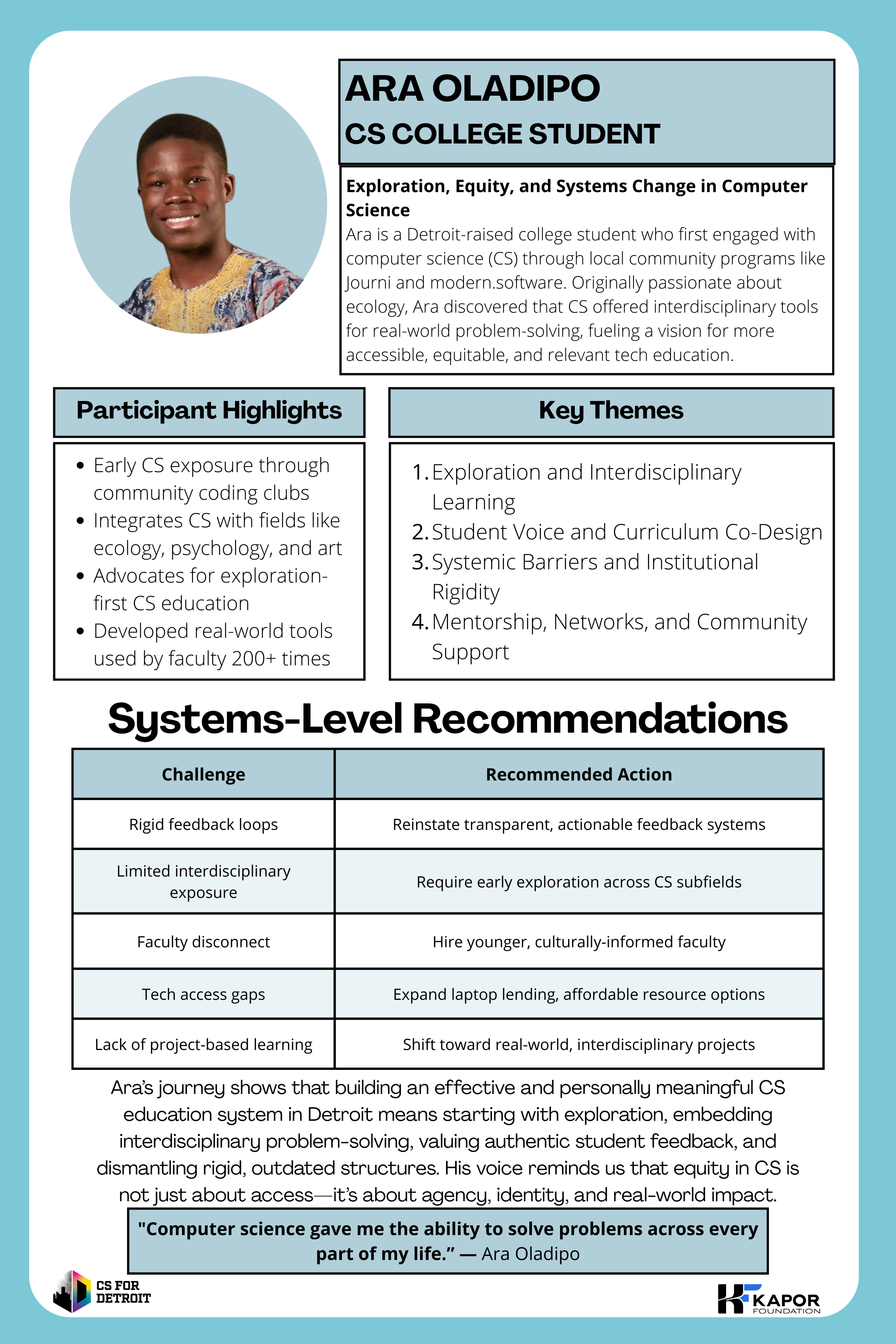
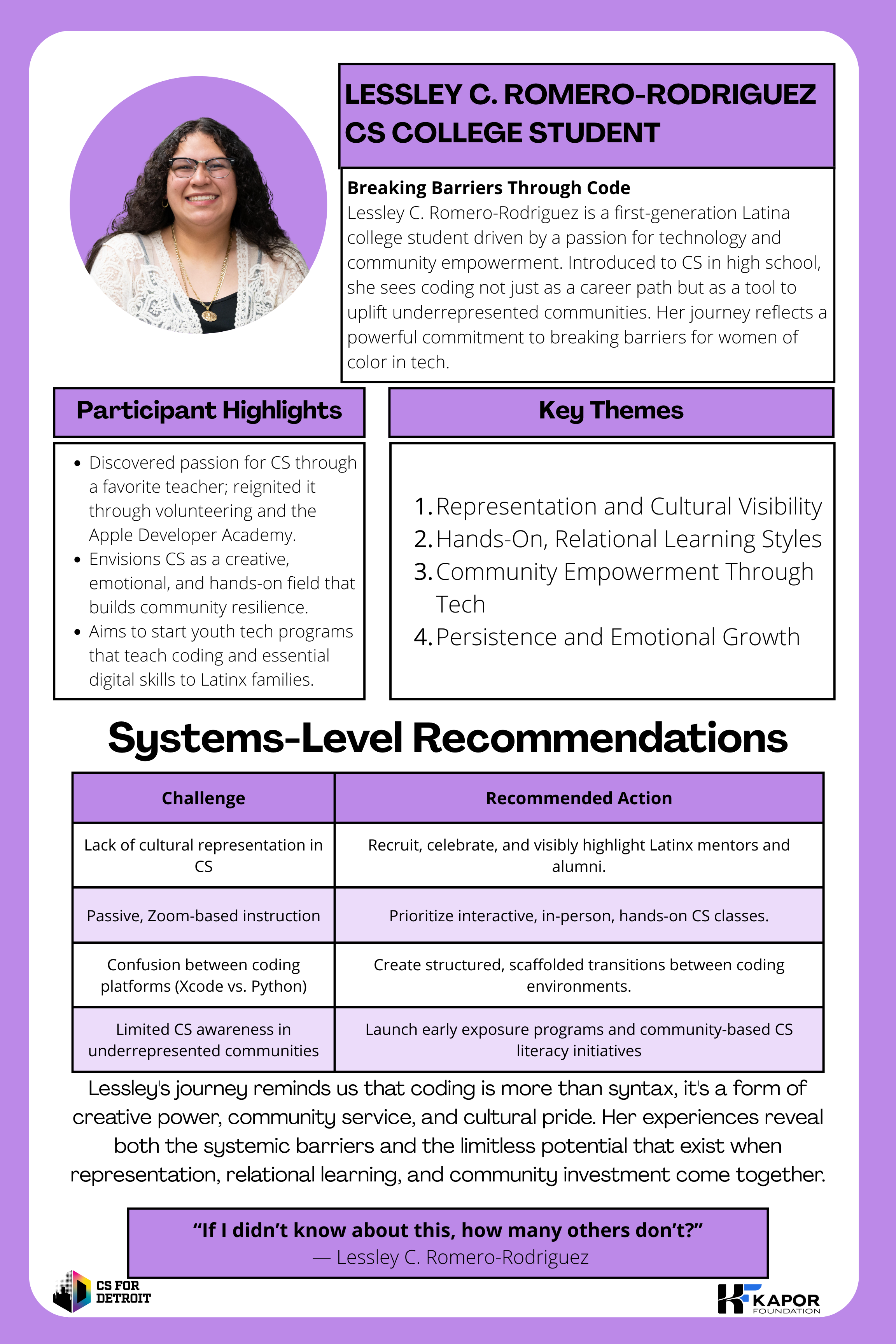
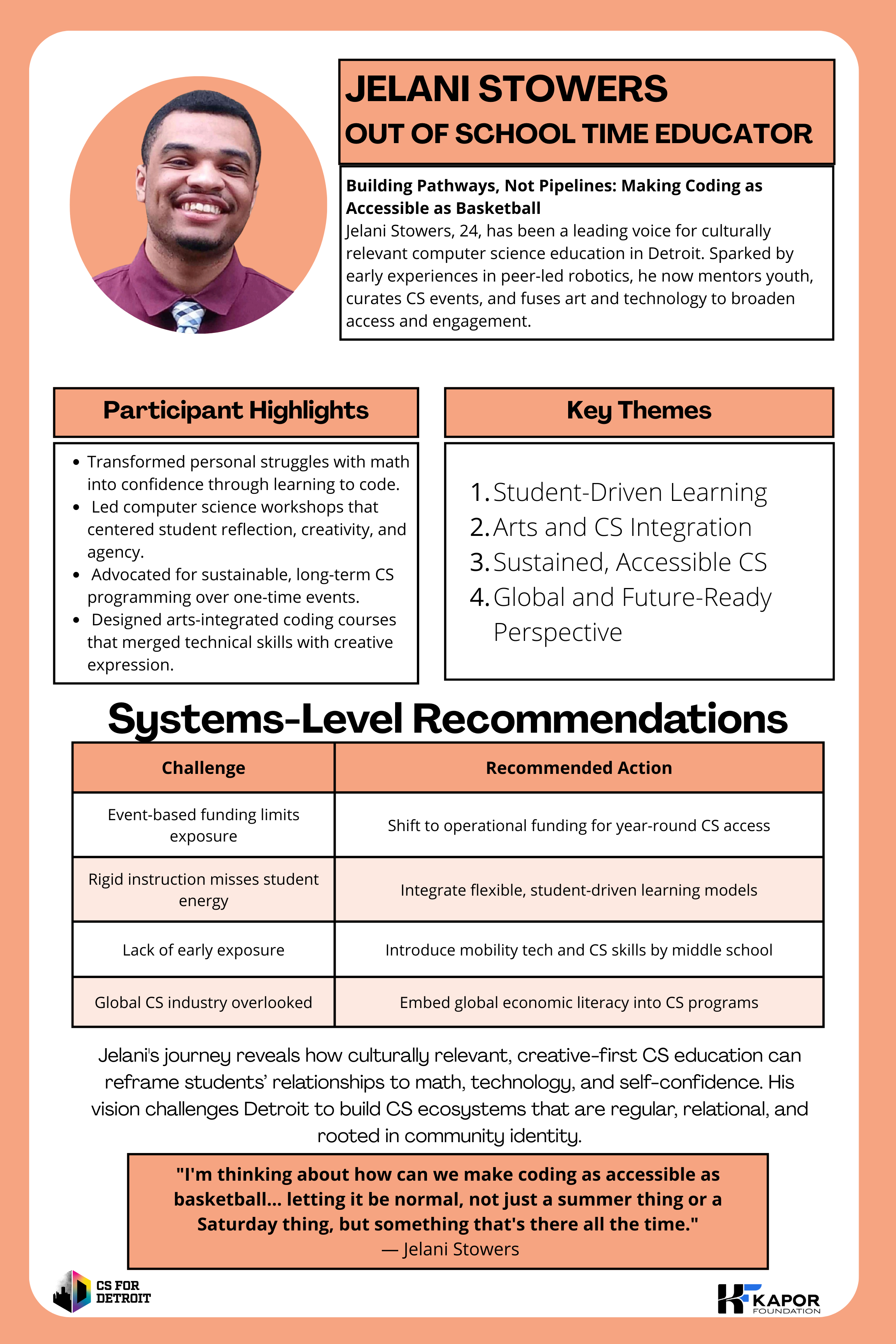
Student researchers conducted 11 oral history interviews with peers, educators, community leaders, and tech professionals. They designed their own screener and tailored interview protocols based on roles and lived experiences. Interviews were transcribed, analyzed for themes, and translated into visual and narrative outputs shared publicly.
Key Insights
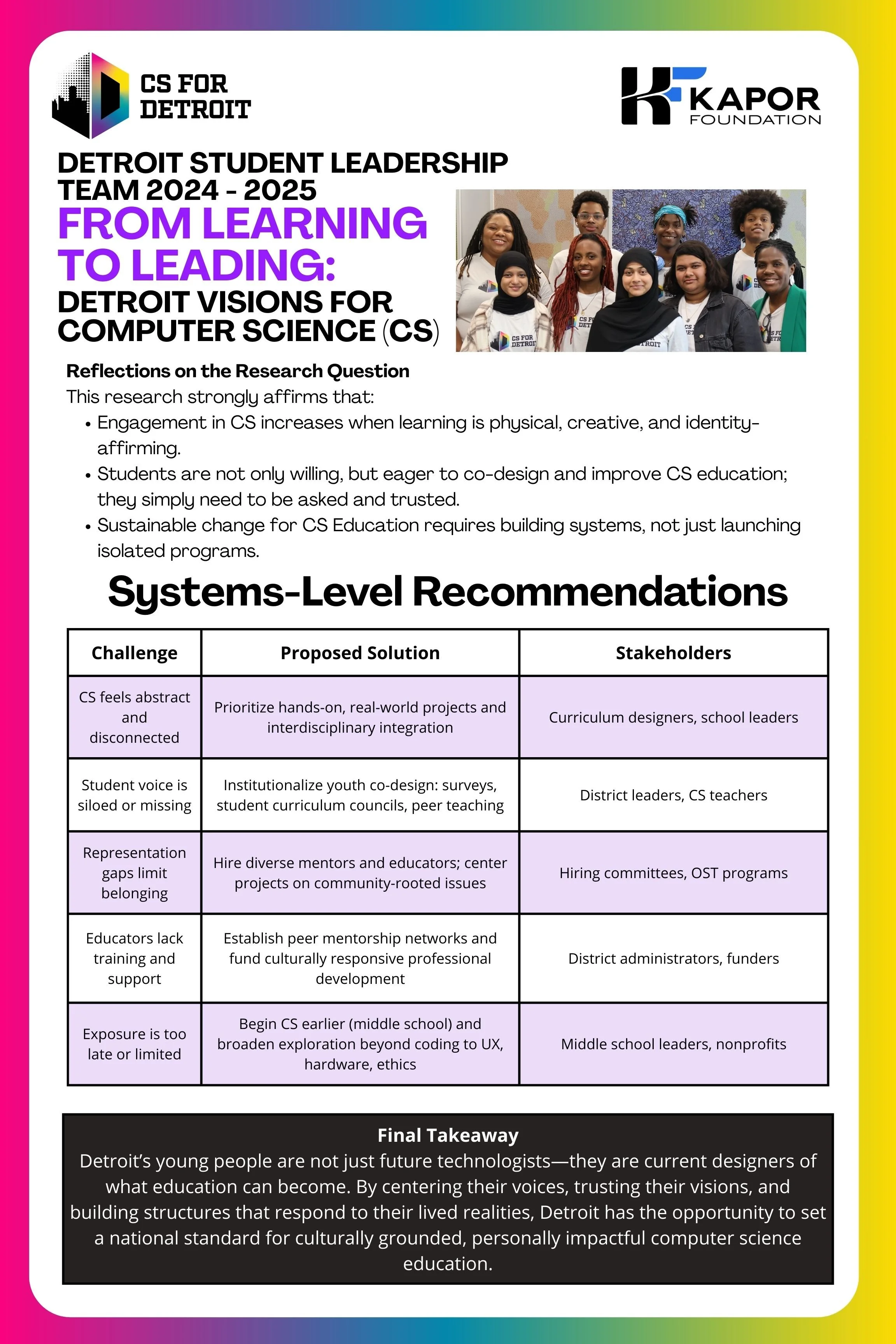
Engagement grows when learning is hands-on, creative, and identity-affirming.
Students want to shape their CS education—but are rarely given the chance.
Barriers like late exposure, underrepresentation, and untrained teachers limit access.
2024 - 2025 Research Findings